
As YouTube, FAST and social video become distribution businesses in their own right, programme distributors are learning to operate channels, interpret audiences and finance new digital-first IP. Andy Fry asks what they must build, what they should buy and where the new competition may come from.
For most of television’s history, distributors acquired rights, pitched programmes to buyers and negotiated licence fees, windows and territories. The audience sat at the end of that chain, out of sight.
YouTube has turned that model inside out. Distributors can reach viewers directly, monetise catalogues and learn what those audiences watch. FAST, social video and microdrama are creating further routes to market, while AI is reducing the cost of preparing content for different languages, formats and platforms.
The opportunity brings an operational challenge. Making thousands of hours available is not the same as making them discoverable, and selling shows to buyers requires different skills from running dozens of always-on channels.
The challenge facing distributors is therefore no longer whether to embrace digital platforms. It is what they need to become to seize this opportunity: channel operators, publishers, producers, tech businesses, audience specialists – or all five.
For Blue Ant Media, YouTube has already moved decisively beyond its former supporting role. The company has grown from two YouTube channels to more than 50 across 11 languages in around two and a half years and now publishes 40 to 45 hours of content a day. “YouTube has evolved into a distribution and monetisation platform in its own right, rather than simply serving as a marketing tool for our catalogue,” says Tyler Budd, senior director, digital at Blue Ant. “The objective is to put content where audiences are, build communities around it and monetise those audiences directly.”
Blue Ant’s natural history brand Love Nature reaches different audiences across YouTube, FAST and traditional TV, each with its own viewing behaviour and commercial model. Entertainment series *Race Against The Tide* (top image) and *Best In Miniature* are linear commissions now performing strongly on YouTube channel CompetitionTV. “Rather than assuming YouTube viewers will migrate elsewhere, we treat that audience as valuable in its own right,” Budd says.

Best in Miniature has enjoyed a new lease of life on YouTube
Passion Distribution has arrived at the same destination through UpStream, its dedicated digital arm. UpStream operates more than 30 YouTube channels across genres including science, parenting, engineering and paranormal, collectively averaging around 50 million views and more than seven million hours of watch time each month.
For Nick Rees, COO of Passion Distribution and UpStream, those numbers settle the question of whether YouTube should still be treated as promotional. The network acquires programming specifically for its channels while also using them as rights-controlled windows for Passion’s catalogue, creating what he describes as an “always-on revenue and audience-building route alongside traditional licensing”.
Fremantle brings the scale of a major global rights owner to the transition. Robert Cocker, its SVP of social and digital, says the early YouTube adopter has spent more than a decade expanding its digital operation and third-party partnerships. “Digital is a key part of this, and we have always seen the value of this space,” he says.
Cineflix Rights is making a similarly emphatic bet. “YouTube is a massive focus for growth,” says Mike Gould, SVP, digital at Cineflix Rights. The company currently operates 20 YouTube channels and intends to increase that to 45 over the next 18 to 24 months.
Gould describes the strategy as “twofold”. “Firstly, it’s a distribution platform for our library,” he says. That involves finding more value in Cineflix Rights’ 8,000-hour catalogue. Deep-volume franchises can support dedicated channels, while programmes from Cineflix Rights and third-party producers can be assembled under broader genre brands. Localisation is another source of growth, with its *Mayday: Air Disaster* content now supporting six dedicated language channels.
But Cineflix Rights’ ambitions increasingly extend beyond repackaging existing television. “Where we want to go next is really looking at how we can acquire content specifically for YouTube,” Gould says. The company is also financing original digital-first programming and building channels with the potential to travel back into FAST, podcasting and conventional television.
That expansion reflects the migration of television viewing itself. On some Cineflix Rights channels, Gould says, as much as 80% of viewing comes through the TV set. “These are the eyeballs that were once watching our content on traditional linear TV,” he says. “You have to be where your audience is.”
Conventional sales remain important: a valuable first window with a broadcaster may still provide the best return, particularly for new programming. But digital is no longer a residual window or “side hustle”. Gould says carefully packaged content across digital services can sometimes rival the revenue expected from a broadcast licence.
That is beginning to influence acquisitions as well. A high-volume factual series that might once have been rejected because it lacked an obvious linear buyer may now represent an attractive digital opportunity. The distributor is not simply asking who might buy a programme; it is assessing whether it can build an audience for it itself.
Passion is taking that logic into original commissioning. UpStream has ordered a slate with Middlechild for channels including OMG Stories, Filth and Origin, while Most Wanted With Billy Billingham is a co-funded 10 x 20-minute series with Creation Content for both its Blue Light channel and Billingham’s own channel. Passion will then monetise through international sales.

Most Wanted With Billy Billingham is a co-funded 10 x 20-minute series
For Rees, the model brings “direct publishing, audience ownership and global distribution” together. Television catalogue establishes the audience; live viewing data shapes the next commissioning decision; and the resulting IP can travel back through Passion’s international sales network. Digital distribution is a source of new programmes rather than simply a way of extending the life of old ones.
Fremantle is also moving beyond exploiting its own programmes. Over the past year, it has licensed 600 titles from third parties, using its publishing and platform expertise to build channels and place programming across its digital hubs. It can also combine complementary Fremantle and third-party assets within the same video, creating what Cocker calls “unique offerings”.
Partnerships with Jamie Oliver, Donal Skehan, Appetite Media, PBS Distribution and W!ZARD Studios show the offer’s reach. For Appetite Media and Skehan, Fremantle creates material for a bespoke YouTube channel and their existing social outlets; its W!ZARD relationship extends into video podcasts.
The same economics could revive TV brands that no longer justify a conventional commission. Cineflix Rights would consider returning a cancelled series as a lower-cost digital-first production, using platform revenue to support new episodes and retaining the possibility of selling it back to TV.
The changes outlined above require a fundamentally different operating discipline and working rhythm. FAST may use familiar skills in scheduling and channel programming, but YouTube is an active publishing environment in which titles, thumbnails, release patterns and editorial positioning are continually tested and adjusted.
“You need an obsession with the data in a way that I don’t think we’ve seen before as an industry in TV,” says Gould. “You have to publish based on what the audience is telling you, rather than what you personally think might be good for the channel. You can take a good show and put it on YouTube, but that doesn’t guarantee anything. If no one can discover your content, no one is going to watch it.”
Blue Ant’s internal team selects titles according to rights and audience potential, then tests metadata, titles and thumbnails. Click-through rates, retention and audience drop-off influence subsequent positioning, while digital performance informs wider programming, acquisition, production and licensing decisions.
UpStream’s channel managers make daily decisions about packaging, retention, publishing cadence, cut-downs and cross-promotion. Its genre network allows the company to benchmark performance, identify audience overlap and decide whether a programme fits an established channel, warrants its own destination or needs a different form.
Connected TV viewing is also changing the creative detail. Rees notes that thumbnails must now work when seen across a room, while short-form cut-downs increasingly act as discovery mechanisms for long-form programmes. “The content sets the potential; publishing and optimisation determine how much of it is realised,” he says.
All of which makes the decision about which capabilities to own increasingly important. Cineflix Rights has worked with external service providers for elements of its YouTube activity, but now intends to expand its internal team and reduce its reliance on vendors for day-to-day channel management.
Gould argues that sustained growth requires people who understand both the content and its audience, are constantly present on the channels and are directly incentivised to improve performance. Bringing that capability inside is also significant when Cineflix Rights asks producers and other IP owners to entrust it with their brands. “They need the comfort that the person they are doing the deal with is fully sitting at the control panel,” he says.
Cineflix Rights will continue to buy in particular services, including software, data analysis and elements of brand and design work. In FAST, technical partners are essential to playout and channel delivery. But it wants strategic and editorial ownership of its YouTube network to sit in-house.
Blue Ant describes a similarly selective division of responsibilities. It retains control of content strategy, rights, brands, audience knowledge and platform relationships, while partners provide infrastructure that would be difficult or inefficient to reproduce internally. In FAST, for example, Blue Ant supplies its schedules, promos and channel identities to Amagi, which assembles the feeds, delivers them to platforms including Roku, Samsung and Tubi and can support the ad-insertion systems required for monetisation.
“It’s a complementary workflow,” says Craig Junner, Blue Ant’s EVP and general manager, global channels and streaming. “We own what goes into the channel and the strategy behind it, while a specialist provides the technology and infrastructure to get it to market.”
Passion and UpStream offer a variation on that hybrid model. Rees says content owners should retain control of IP, rights strategy, editorial direction, commercial objectives and final approvals. UpStream provides the operating layer – including channel strategy, publishing, analytics, Content ID and versioning – through specialist staff, while sharing catalogue, rights and back-office systems with Passion. Digital insight and traditional sales intelligence therefore sit within the same rights strategy.
Fremantle has drawn the boundary further inside the business. Its central team oversees content exploitation, rights and clearances, piracy, monetisation, advertising sales and sponsorship. External partners remain part of the model, but Cocker says they are generally used to supply genre expertise or amplify an existing offer rather than own strategy.
Yet Fremantle is not simply a buyer of services. It is positioning itself in the same market as the digital distributors and channel managers that might once have been partners. A team overseeing 1,500 social accounts now offers producers and other rights holders bespoke channel-building and distribution services of its own.
That places Fremantle on both sides of the build-or-buy debate: it may still appoint outside expertise where useful, while competing for third-party catalogues and direct relationships with producers, talent and IP owners. Its publishing network, platform knowledge and traditional distribution infrastructure become part of the proposition offered to those partners.
For Cocker, these relationships form part of a wider digital ecosystem rather than a catalogue-services business. Fremantle can distribute a finished programme, build and manage a channel, create digital assets, connect complementary rights and explore sponsorship or ad opportunities.
The build-or-buy question is also starting to reshape the sector through acquisition. Sphere Abacus, the international sales arm of Sphere Media, has acquired digital distribution specialist Rocket Rights/Rights Booster and renamed it Rocket Booster. The new company will lead multi-platform digital and social distribution across the combined catalogues, while Sphere Abacus’s existing sales team retains responsibility for traditional television licensing.
For Sphere Abacus, the deal brings a ready-made network of relationships with more than 65 VOD and FAST platforms into its international sales infrastructure. Cat Davie, formerly chief operating officer of Rocket Rights/Rights Booster, becomes managing director of Rocket Booster, with founder Matthew Frank moving to executive director. It is a clear example of a traditional distributor choosing to acquire specialist capability rather than assemble every part of the digital operation from scratch.
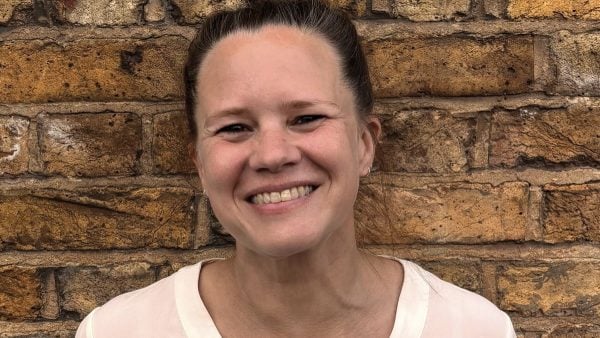
Sphere Abacus has restructured its digital
distribution with Cat Davie heading Rocket
Booster
Quintus Media began building a channel-based distribution business more than a decade ago, before much of the traditional sector regarded YouTube as a serious destination for premium factual programming.
Its model combines production, distribution and an owned channel network. Acquired content sits alongside Quintus Originals, while broadcasters and streamers can partner on projects developed for its digital channels. As TV budgets have fallen and digital production values risen, CEO Gerrit Kemming believes the two have “met in the middle”.
Quintus is now moving beyond the exploitation of long-form factual catalogue into more overtly creator-led ideas. The Green Deal (see Format Watch) points towards another evolution in the distributor’s role. The business is not only placing a finished programme on multiple platforms; it is designing IP around the way digital audiences assemble and move. In this model, distribution is embedded in the format itself.
Quintus prefers to own and develop channels rather than become a general service provider for other rights holders. However, it is exploring a more focused variation on the old multi-channel network model, bringing together specialist creators within clearly defined factual niches. The value would come from strengthening their production, professionalising channel management and giving brands access to a coherent cluster of engaged communities.
AI is another key consideration for distributors. Localisation, for example, is emerging as one of the clearest areas in which AI can alter the economics. The cost of conventional dubbing has often made it difficult to justify launching a programme in a relatively small market, even when the underlying content has international appeal.
Blue Ant recently completed 300 hours of AI dubbing across two brands and four languages – French, German, Portuguese and Spanish – leading to the launch of eight YouTube channels. Those same versions are now helping take channels into new FAST markets in EMEA.
A single dub can earn returns across YouTube, FAST, pay TV, streaming and programme sales, spreading its cost across several windows and making more of a catalogue commercially viable.
Cineflix Rights is seeing comparable results. Half of the programming on its Spanish-language Mayday channel has been AI dubbed, while the Brazilian Portuguese channel is entirely AI dubbed. Gould says neither viewing data nor audience comments suggest significant resistance to the approach, while the dedicated Spanish channel has attracted millions of views from markets that contributed only limited viewing to the English-language version.
Passion’s Spanish-language science channel Ciencia Pura provides a further example of the value of a distinct local-language proposition. Rees believes even a modest reduction in localisation costs can make additional territories and more specialised language channels viable when applied across a catalogue and network. But he cautions that human review remains essential and can be decisive in helping content over perform.
AI could also accelerate editing, clipping, metadata creation and content versioning. But it is not simply a mechanism for flooding every available platform. The economic value still depends on rights, quality control, audience demand and a strategy capable of turning lower production costs into sustainable channels.
Quintus’s Kemming says his company is not quite at a point to embrace AI production – but he says: “It will come. We’ve been talking to some really cool AI production companies – and I’m not talking about doing a scene here or a scene there, or letting AI help us produce more efficiently. I’m talking about proper AI production.”
Kemming sees an obvious challenge to his business model in this development. AI, he says, could create a “flood of high-quality content”, leaving channel operators competing against a greater volume of programming for viewers’ attention.
This is part of his rationale for pushing towards creator-led programming aimed more directly at younger viewers. While documentary remains relevant, Kemming believes the creator economy’s personalities, storytelling and routes to audiences offer additional differentiation.
There is, perhaps, also an opportunity in AI – though this is still in the near future. Currently, Quintus’s channels require between 2,000 and 3,000 hours of content each year – a lot of which is financed or partially-financed by broadcasters. As that pool of money contracts, AI-supported production may offer one way of maintaining the necessary level of content supply.
Summarising, Junner argues that success will not come from betting on YouTube, FAST or the next format, but from moving rights intelligently between platforms, territories and business models.
Rees makes the same argument in terms of an interconnected ecosystem. “For us, the biggest opportunity is not one platform; it is owned audiences, original IP and building an ecosystem that brings all that together,” he says. “YouTube remains the core platform, FAST extends proven brands and short-form provides discovery.”
The longer-term prize is to use catalogue to establish communities, their behaviour to commission originals and the resulting rights to drive international sales. Rees expects microdrama’s mobile-first logic to spread into micro-reality and factual entertainment.
Fremantle’s near-term priorities remain YouTube and FAST, although its 12 billion TikTok views in 2025 show how quickly another platform can become significant. “Appetite for content will only continue to grow, so we will continuously be assessing how audiences are consuming it,” Cocker says. Fremantle is also building expertise around short-form and microdrama, but the pace of change makes five-year predictions provisional.
“The opportunity is to take multiple bites of the apple and understand where a piece of content can generate the greatest return at each stage of its lifecycle,” he says.
The traditional distributor waited for buyers to aggregate audiences. Its successor must still sell programmes, negotiate windows and protect rights, but must also understand discovery, build communities, commission for new platforms and interpret audience behaviour in real time. The choice is not simply whether to build or buy those capabilities, but which parts of the audience relationship are too important to surrender – and which partners can turn a bewildering array of platforms into a coherent distribution business.