For all the talk about creators, platforms and algorithms, a more traditional piece of the entertainment business is starting to assert itself in digital-first content: the format.
The Drop’s Format Watch identifies new and emerging ideas that have the potential to grow beyond their original execution – whether through further seasons, new territories, different talent, brand partnerships or expansion across platforms. Crucially, scalability doesn’t necessarily mean graduating to television. Increasingly, digital formats can become substantial IP businesses while remaining digital-first.
Several trends emerge from this year’s selection. One is the growing sophistication of the video podcast. Shows such as *The Drawing Room with Mo Welch* and *Outsiding* add settings, recurring beats or activities to talent-led conversations, potentially creating IP that can survive a change of host or territory.
Elsewhere, producers are exploiting the immediacy that digital allows. Fawkes Digital’s *Date Me Right Now* takes dating onto the streets, combining real-world encounters with mini-games, hot takes and moments designed to generate social conversation. *Boxed In* goes further, compressing the narrative journey of a multi-week talent competition into one 12-hour livestream controlled by its audience.
Creators themselves are being embedded into the format engine. *Are They a Keeper?* makes Nella Rose’s judgement central to its dating mechanic. Harry Pinero features in *Race to the Base*. *The Green Deal* brings creators into the format in a different way, inviting them to back sustainable start-ups with their promotional reach rather than money. Their audiences and influence become part of both the judging mechanic and the potential prize.
What connects these picks is not production scale but the clarity of idea: distinctive, repeatable mechanics designed for digital audiences, but with enough flexibility to travel, evolve and become something bigger.
House Rules
Wall of Entertainment for Tubi
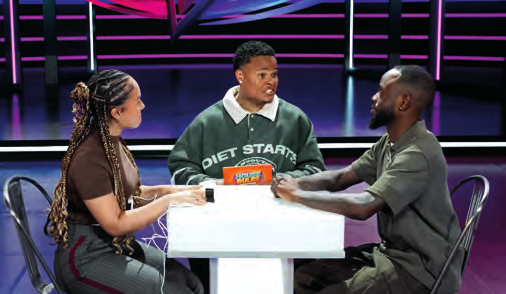
Could the humble household become the next battleground for creator-led entertainment? That is the proposition behind *House Rules*, a relationship-focused comedy game show from UK digital studio Wall of Entertainment, which is using the format to make its first strategic move into the US.
Hosted by social media creator Laro Benz, *House Rules* pits two couples against each other in a series of domestic challenges, testing teamwork, communication and their ability to cope when household tasks descend into chaos. Across four rounds, contestants face rapid-fire challenges, comic sound and pass cues and ticking-clock scenarios before one couple is crowned the pair that really “rules the house”.
For Wall of Entertainment co-founder Joivan Wade, the simplicity of that premise is central to its potential. “*House Rules* is a format, not just a show,” he says. “At its heart is a simple, ownable mechanic, the unwritten ‘house rules’ every couple thinks they live by, and that’s endlessly repeatable and endlessly relatable.”
The creator-first execution is equally important. Benz, who has more than 37 million followers across social platforms, brings an established audience and an instinct for short-form comedy to his streaming debut, while Wall of Entertainment brings production infrastructure and format development experience.
Wade says the show is already finding an audience on Tubi and generating social traction, with its Instagram page delivering 14 million views on clips in its first six weeks. Tubi, he adds, empowered Wall of Entertainment “to create and lead the creative through production and post, which let us make the show we wanted to make”.
*House Rules*, alongside companion format *Substitute Teacher*, marks the company’s expansion into US-targeted production. But the ambition extends beyond a one-off commission. “Because the game itself becomes a physical product, the IP lives beyond the screen,” says Wade. “That’s what turns a hit show into a franchise.”
Wall of Entertainment has also retained the rights, giving the company and its talent, Wade says, “a real incentive to keep building the IP and the franchise for the long term”.
The Green Deal
Quintus Media for YouTube/Joyn
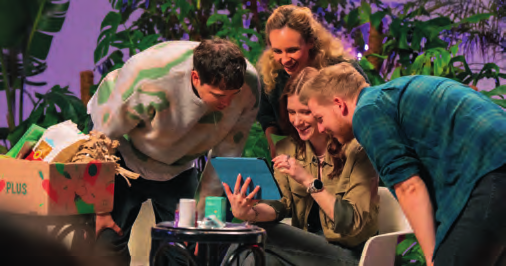
*The Green Deal* takes a familiar television format engine and rebuilds it around the creator economy. Sustainability-driven business-to-consumer start-ups pitch their businesses to a panel, but instead of wealthy investors offering cash, leading creators can invest something potentially just as valuable: their reach.
Produced by Quintus Media initially for YouTube, the studio-based show sees five to eight start-ups pitch to a jury of creators, who individually decide whether to make a “reach investment” by putting their promotional power behind an idea. A climate adviser brings expertise to the process, while participants undergo sustainability and commercial checks designed partly to guard against greenwashing.
The audience isn’t simply watching either. An audience wildcard introduces community participation into the decision-making, while an online shop allows viewers to buy products presented in the show. Three episodes followed an initial pilot, with Quintus discussing a further run with brands. German streamer Joyn also came on board.
For Quintus CEO Gerrit Kemming, the format reflects a broader shift in the company’s strategy. “How can we take what we know from decades of TV – how content works, how the business works – and apply this to the digital world? You produce different storytelling, of course, with different talent and different stars. Entertainment still works, but the distribution is completely different.”
Episodes can live on the show’s own channel while also travelling through participating creators and their communities – potentially giving start-ups and brands access to multiple audiences.
Kemming envisages the model scaling digitally too, including potential English and French-language versions. “*The Green Deal* is so centred on digital because the jury is full of creators,” he says. “They activate their communities and the distribution is a big part of it. The format doesn’t take place on this one channel – it takes place on the internet, in different communities.”
Boxed In
Objekt Productions and Mako Studios for Ministry of Sound

What if a multi-week reality talent competition could be compressed into a single day? *Boxed In* takes the structure of a traditional talent show and turns it into a 12-hour live digital event, with 30 DJs competing at Ministry of Sound in London and the online audience given control over who survives.
Six industry mentors, including Sam Divine, Fish56Octagon, Mak 10, Jakkob, Sian Owen and G33, guide the contestants through five elimination rounds, with viewers voting in real time to determine who progresses and wins. The prize is substantial: a Ministry of Sound residency and £25,000 worth of professional equipment.
For Alex Kempner of Objekt, the format’s defining characteristic is its compression. “Condensing a stripped reality competition into a single, immersive 12-hour live moment builds incredible tension. It lets audiences hang out, interact, and shape the outcome in real time.”
That combination of live event, competition and audience control makes *Boxed In* particularly suited to digital-first viewing. Rather than asking audiences to return weekly, it creates an event around which a community can gather, participate and generate conversation simultaneously.
It also has a format architecture. The core elements – mentors, endurance-based live competition and audience-controlled eliminations – can be adapted beyond DJs and electronic music. Kempner argues that the concept could travel through Ministry of Sound’s international network, while the producers envisage applications ranging from esports and gaming to skateboarding and food.
There is also a significant content multiplier behind the live event. A single 12-hour stream can generate a VOD version, highlights and potentially hundreds of short-form social assets.
With Ministry of Sound wholly funding and owning the property, *Boxed In* is already positioned for international licensing, co-production and brand partnerships. Its next step could be taking the same formula to music hubs including Ibiza, Berlin, Miami and Tokyo.
Outsiding
Cold Glass Productions for podcast platforms
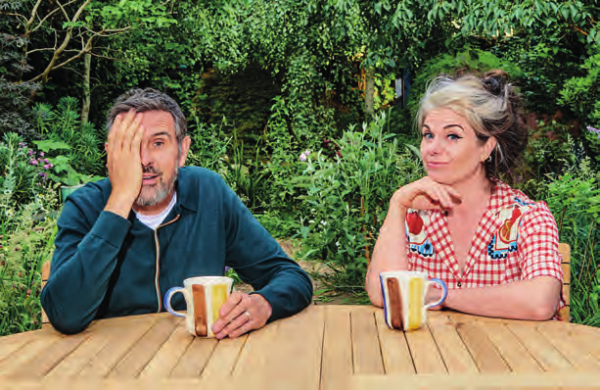
The video podcast is moving beyond the studio. *Outsiding*, from Digital Video Award-winning *Dish* producer Cold Glass Productions, takes the celebrity conversation into gardens and natural settings, combining the intimacy of a podcast with the visual appeal and practical possibilities of the outdoors.
Hosted by broadcaster and author Caitlin Moran and garden designer and presenter Adam Frost, the show invites celebrity guests outside for conversations intended to reveal a different side to them. Bob Mortimer was the first guest, sharing memories of his father, “rock ‘n’ roll” exploits from the Vic and Bob era and the pleasure of a pint after a country walk. Other guests include Alex James, Alexander Armstrong, Joanna Scanlan, Dawn O’Porter and Kerry Godliman.
The setting gives *Outsiding* an additional format layer. Frost contributes gardening knowledge and practical advice, while the natural environment creates prompts for conversation and encourages audiences to reconsider their own relationship with the outdoors.
Cold Glass CEO Ben Kerr identifies a sizeable audience intersection behind the proposition. “There are 13.1 million people in the UK who regularly listen to podcasts and love being outside in either the countryside or their garden,” he says. “*Outsiding* is the show for them.”
Its digital architecture extends beyond the weekly show. Long and short-form video and audio are distributed across podcast platforms, YouTube and Instagram, while a Substack offers additional material from the hosts and enables viewers to interact with one another.
Cold Glass co-founder Mark Rivers says the ambition is “to do something bigger than simply create a show”, with its audience developing into a community. The combination of presenters, guests, tone and editorial, he adds, distinguishes *Outsiding* from the “usual, boring, stuffy way that this subject is usually covered”.
Cold Glass retains the rights and sees scope to expand *Outsiding* into broadcast or streaming, a touring live experience, merchandise and outdoor or gardening products.
“The show is organic,” says Rivers. “The IP will develop the more we publish. We are building a community and the show will serve it.”
Date Me Right Now
Fawkes Digital for MTV UK

Dating shows are hardly short of formats, but *Date Me Right Now* gives the familiar proposition a distinctly digital-first twist: take the search for love out of the studio and put it onto the streets.
Created for MTV UK, the format sees creator Kimberley Cumberbatch act as wingwoman to a single hopeful dater, introducing them to three potential matches.
Quickfire questions and mini-games punctuate the search, before each prospective couple meets at a rendezvous point for the crucial decision: who gets the proper date?
The final uncertainty – will anyone actually turn up? – provides an in-built cliffhanger and plenty of potential for social clips and online debate.
For Lucy Smith, creative director and founder of Fawkes Digital, the format’s appeal is both its entertainment value and its ability to reflect contemporary dating culture. “It’s been a dream to produce this series which combines that heady mix of belly laughs, eyes-through-fingers cringe and poignancy, held together by a truly extraordinary host in Kim,” she says. But beneath the comedy, Smith argues, the show “accidentally on purpose paints a portrait of an entire generation who have come of age in the era of swipe culture, post-pandemic uncertainty, economic weariness.”
The combination of a clear format engine and a broad social theme gives *Date Me Right Now* room to expand. Smith describes it as an “endlessly adaptable” format, with potential themed editions around Pride, Christmas, “cuffing season” or different generations of daters, alongside location-based versions.
The digital-first proposition is particularly strong, she argues. Mini-games, vox pops, hot takes and unpredictable outcomes are built into the format, creating material that can live beyond the main episode and drive conversation across social platforms. Creator cameos also offer a route to continually refresh the talent mix.
With MTV UK holding the format rights and Fawkes Digital having first refusal to produce it, the ambition is to build *Date Me Right Now* into a recognisable YouTube brand before potentially expanding into linear television and brand partnerships.
Race to the Base
Cowshed Collective for Chicago Town

What happens when three teams race to get as far away from London as possible – only to discover that they must turn around? That is the engine of *Race to the Base*, a creator-led reality competition developed by Cowshed Collective and fully funded by Chicago Town.
Three pairs of creators set off on separate journeys, receiving challenges from a host creator based in the UK. Their performance determines how much money they have to travel further, keeping the teams in competition even while they are in different locations. Then, 24 hours into the adventure, comes the twist: they must ‘race to the base’, in this case Chicago.
The outward journey, daily challenges and sudden change of direction give the show a structure that could generate both a continuing story and self-contained moments for social distribution. Different teams, routes and challenges could refresh subsequent versions without changing the central mechanic.
For Cowshed Collective CEO and co-founder George Cowin, the financing is as interesting as the game. Chicago Town has funded the production, but the partners have split the IP rights equally. The brand has first refusal on another outing; if it does not take that option, Cowin says the format could potentially continue elsewhere, with Chicago Town involved in a different capacity – or not at all.
That makes *Race to the Base* an instructive case study. Brand funding has enabled a sizeable original digital-first production, but the ambition is for the idea to have a life beyond its initial campaign. Whether it earns that life will depend on how well the creator teams and competitive twists hold an audience. The underlying proposition, though, is portable: change the cast, destination and sponsor, and the race can begin again.
The Drawing Room with Mo Welch
Second Peninsula for PBS

What if the interview format itself became the canvas? *The Drawing Room with Mo Welch* takes the familiar celebrity interview and gives it a simple visual mechanic: comedian and New Yorker cartoonist Mo Welch and her guest draw portraits of one another while talking about their lives, work and creative journeys.
The nine-episode series, produced by Second Peninsula in association with PBS SoCal, features guests including Brett Goldstein, Sarah Silverman, Vijay Gupta, Tig Notaro and Margaret Cho.
For Second Peninsula founder and creative director Steve Goldbloom, however, drawing is more than a visual gimmick. “Doing something creative together changes the nature of the conversation,” he says. “People relax, their guard comes down, and you get a different kind of intimacy than you would in a traditional interview.”
That gives the format a neat engine. The portraits develop alongside the conversation before culminating in a reveal, providing each episode with a beginning, middle and end. As Goldbloom puts it: “The activity creates the conversation, and at the end you have this piece of art that captures the relationship between the two people.”
Goldbloom says the series is performing solidly on YouTube, while shorter Instagram clips have reached millions. Individual stories, admissions and exchanges can work independently of the full episode, with the strongest clips feeling “evergreen rather than promotional”.
That combination of long-form conversation and social-first assets potentially gives *The Drawing Room* room to scale. Goldbloom argues that it is easier to expand something genuinely designed for digital into broadcast than “to take a traditional broadcast show and try to reverse-engineer it for social”.
Different hosts and guests could also inherit the central mechanic. “The central idea – two people connecting by making something together – travels very well,” he says.
Second Peninsula shares the rights with PBS and PBS SoCal.
Are They a Keeper?
After Party Studios for Channel 4.0

Dating formats usually ask contestants to judge potential partners for themselves. *Are They a Keeper?*, a new Channel 4.0 format from After Party Studios, adds a creator-native twist: hand that judgement over to somebody else.
The new format sees digital-first favourite Nella Rose play agony aunt to singles who no longer trust their instincts when it comes to love. Rather than simply hearing about their relationship problems, Rose goes on a date with the contributor’s partner or situationship herself, putting them through a ‘big sister grilling’ before delivering an unfiltered verdict on whether the relationship is worth pursuing.
For Sam Ewen, head of entertainment at After Party Studios, the combination of real relationship stakes and a consistent creator role gives the idea its returnability.
“The contributors bring the stakes – the specific relationship and the doubt that’s real to them – and Nella brings a consistent lens that turns that raw material into something with a signature voice and a satisfying resolution,” he says. “Whatever the contributor brings, the ‘big sister grilling’ structure can shape it into the same kind of payoff.”
That creates a simple format engine: problem, investigation and verdict. Each case is different enough to generate fresh stories, while the host’s role and tone provide continuity. Ewen says the format’s defining signature is “unfiltered brutal honesty”, with the verdict giving every episode a clear conclusion.
The structure is designed for digital distribution. Each relationship provides a self-contained emotional story, while confrontations, revelations and verdicts create multiple opportunities for short-form cutdowns and social debate.
After Party Studios owns the rights and sees international potential in a format whose central question – can you trust your own judgement in love? – travels easily. “The mechanics and the emotional dynamic are culturally portable,” says Ewen.
That also means *Are They a Keeper?* does not have to remain tied to one personality. Different territories could find their own version of the big-sister figure – retaining the interrogation-and-verdict mechanic while allowing local talent to make it their own.
The Lying Game
Strong Watch Studios for Channel 4
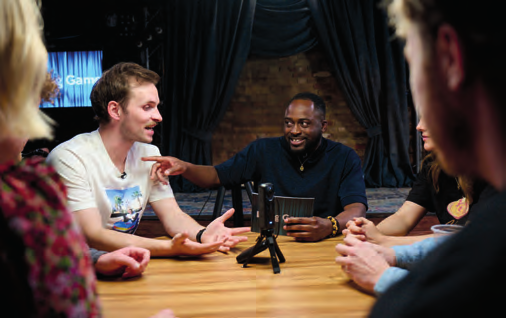
Can the looseness and chemistry of a comedy podcast be turned into a proper entertainment format? That was the starting point for *The Lying Game*, a digital-first comedy format developed by Strong Watch Studios for Channel 4’s *A Comedy Thing*.
The premise combines conversational comedy with the bluffing and guessing games that have proved particularly effective in YouTube entertainment. A group of comedians are given the same randomly selected topic and each tells a personal anecdote. Five are telling the truth; two are lying. Their fellow comics must work out who is trying to deceive them.
“We developed it as a gamified podcast,” says Strong Watch Studios co-founder Thom Gulseven. “How do you take all the brilliant chat you get on disparate comedy podcasts and turn it into a show, combining that with the language of bluffing and guessing that we know how to do so well in YouTube entertainment?”
The format began as a test within *A Comedy Thing*, Channel 4’s digital comedy brand, which Strong Watch produces and manages. Launched on YouTube in 2025 as a home for emerging comedy talent and original unscripted formats, the channel generated 6.5 million YouTube views and 165,000 hours of watch time in its first year, with 86% of its audience aged under 35. *The Lying Game* emerged as one of its breakout titles and subsequently expanded onto Spotify.
For Gulseven, the format provides “an amazing vehicle for a new wave of comedians”, while its ensemble structure allows new comics and high-profile social guests to rotate through the show without changing the central mechanic.
Now the experiment is moving beyond its digital origins. Strong Watch says the format is available for adaptation in multiple territories and has been picked up by E4 as a long-form show.