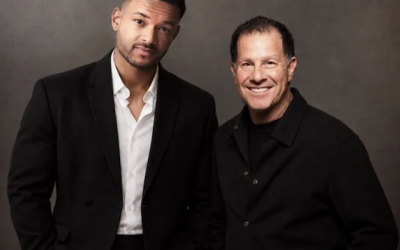
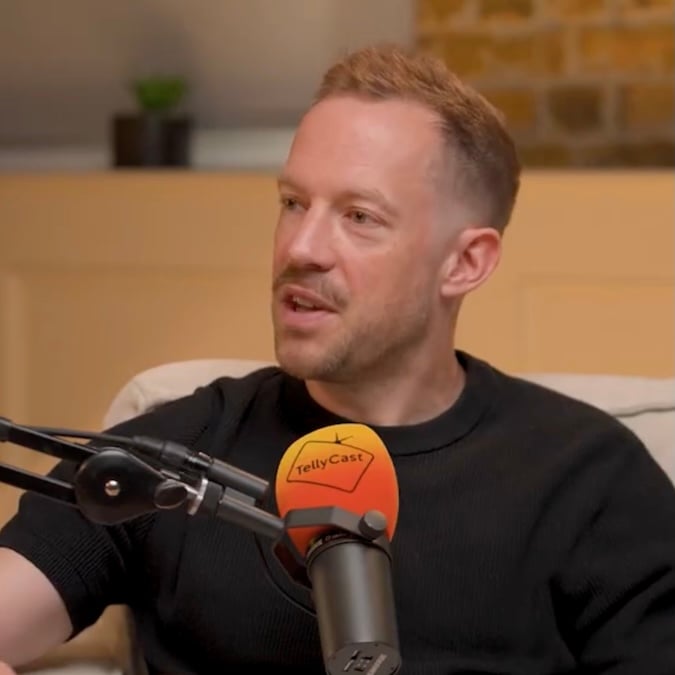
Strong Watch Studios co-founder Ben Powell-Jones believes the creator economy is already giving way to something narrower and more direct – the community economy. He talks to The Drop about the Channel 4 deal that proves the model, and why audience size has stopped being the point.
For most of the past decade, growth in digital video has meant one thing: reach. Brands and creators built a broadly symbiotic relationship around scale, and the bigger the audience, the better the deal. That assumption is now being tested by operators who think the real money has moved somewhere narrower.
Ben Powell-Jones, co-founder of Strong Watch Studios, is one of them. “We’ve been in the creator economy for a number of years,” he says. “We’re moving out of the creator economy now, and I think we’re moving into community economy – direct to consumer. Things like Patreon just becoming much bigger and prevalent and being the thing that people target, rather than the kind of symbiotic relationship brands and creators have had for a number of years.”
Powell-Jones set up Strong Watch with Thom Gulseven in 2023, backed by Hat Trick Productions, after the pair left LADbible, where Powell-Jones ran the original content division behind formats including Snack Wars and Agree to Disagree. Three years in, the studio has worked its way onto a genuinely broadcast-scale slate – production on Netflix’s Sidemen format Inside, commissions for the BBC, ITV and Channel 4 – while insisting, still, that it isn’t really a digital company at all. “We’re often referred to as a digital company,” Powell-Jones says, “but I think we think of ourselves as a content company.” If a brief calls for video, he wants Strong Watch to be first port of call, whatever the platform. “If someone came to us and said, we need you to make a video for the CEO of Barclays Bank, it’s only gonna be seen by three shareholders – great! If the ROI works and it’s a functional piece of business, that’s great to us.”
That platform-agnostic instinct shapes how Strong Watch hires, too, and it’s a deliberate contradiction: a digital-first studio staffed increasingly by traditional TV executives. “I think it’s interesting that a lot of people have picked up on that,” he says. “The exec hires seem to be coming from a more traditional background.” His advice to TV freelancers currently struggling for work is to stop applying for the same shrinking pool of commissions and look sideways instead. “If you’re a creative person and you can be flexible in your thinking, you might find you’ve got loads of skills that have been born through going through the hierarchical world of TV that are really, really valuable to companies that are just setting up new departments.” What won’t survive the move, he says, is specialisation by job title. “I just don’t think we’ll ever hire anyone again that is a development exec. That person will also have to do the shoot, produce the shoot, sit in the post.”
Strong Watch’s clearest proof of the model is A Comedy Thing by Channel 4, the YouTube-hosted comedy channel it launched with the broadcaster in 2025 and which has just been renewed for a second year. Tellingly, Powell-Jones credits the project’s origin not to a creative idea but to Gulseven’s read of a structural gap. “There’s no market anymore, especially now with Live at the Apollo being cancelled, for young upcoming comedians,” he explains. “The audience for comedy hadn’t gone away. It just wasn’t being served on TV.” That gap, not a format, was the pitch – and it reflects a wider rule Powell-Jones applies to every meeting. “We don’t ever go in and say, listen to this brilliant idea. Everyone has brilliant ideas all the time. What we compete with is: is anyone else offering this? Make it a no-brainer. And then the idea can be on top of that.” In its first year, the channel delivered 6.5 million YouTube views and 165,000 hours of watch time, with 86% of viewers under 35.
Powell-Jones sees that project as one small piece of a larger convergence he thinks is now unstoppable. “I think the biggest change is that digital has always historically been seen as something you do as an add-on,” he says. “But that process will be ended when there isn’t two commissioning teams – when there’s one commissioning team and they commission digital and TV and whatever else out of that area. That’s when it’s reached the point where it’s just commissioning content.” He is more cautious about a related trend: broadcasters acquiring digital-first hits, à la TFI Friday’s YouTube-born revival or Piers Morgan’s Uncensored. “I’m not sure about dominant,” he says. “There are endless roadblocks to using historic IP” – rights split between broadcaster and production company, owners with fixed ideas of tone, and expectations of TV-level advances that digital budgets simply can’t match.
What Powell-Jones takes from the Uncensored example isn’t the IP question but the targeting. Discussing Morgan’s decision to extend the brand into football punditry, he’s careful to frame the lesson commercially rather than editorially: “What I’m saying is, we should all be thinking – not who are the people that we would like to be targeting, or it would be great if these people watched our shows – but who actually is watching our shows, and who’s going to go into watch our shows. And then, if your project aligns with that, that’s a good idea.” In a market with “more content being made than ever before” and “less guaranteed success”, knowing your real audience beats wishing for a bigger one.
The economics of Strong Watch’s own IP, meanwhile, show what the community economy looks like once it scales down rather than up. People Are Deep, its weekly interview format, has been licensed to Pluto TV, with Amazon now exploring the same route – and Powell-Jones is quick to puncture the assumption that FAST distribution is expensive. “What costs a lot is if you want to put on 80 episodes of the Crystal Maze from the nineties – they’re all on tapes in deep storage, and that’s the expensive bit. But if you’re digital-first and you’ve shot everything in 4K, it’s pretty much good to go.” That lets Strong Watch treat FAST placement as pure upside: “It’s really about micro-transactions. Anywhere you can get a couple of quid on.”
It’s Time Team, though, that Powell-Jones keeps returning to as the clearest illustration of the community economy’s logic – and its traps. “One of the biggest Patreons in the UK at the moment is Time Team,” he says, pointing out that its Patreon-funded revival was built without its original host. “The people that like it are the people who like that thing,” he says of the show’s format rather than any single presenter. He draws the same lesson from an unrelated conversation Gulseven had with a company making videos about trains: “They said, no, the thing that the people that love this train spot is – it’s not the trains, it’s systems working to time. It’s the fact that all these different complex systems have to happen for the train to arrive within a one-minute tolerance.” The takeaway, he says, applies to any format chasing a direct-pay audience: “You have to really investigate – why do people love that thing specifically – if you want to be successful in community economy. It might not be what you think it is. It might not be purely the creator.”
On AI, Strong Watch’s position is narrower than the industry conversation around it. The studio uses AI throughout its operations but has no plans to make AI-generated content itself, and Powell-Jones’s reasoning is commercial rather than principled. “I think there’s gonna be a big resistance to AI that you can already see happening,” he says. “AI slop is the term. I think at some point there’ll be a proudly-not-AI kind of sensibility that goes on across platforms” – the same instant-skip reaction, he predicts, that a “paid partnership” label triggers today.
Five signals of the community economy
Direct payment replaces the brand middleman. Patreon-style subscription is displacing the brand-creator relationship as the model creators build towards.
Niche beats broad. Narrowing an audience, rather than maximising it, increases the willingness to pay – because the content feels made specifically for the people paying for it.
The format is the asset, not the face. Time Team’s Patreon success without its original host shows fandom can attach to a premise rather than a presenter – provided you’ve correctly identified what that premise is.
Strategy has to come before the idea. Pitches that lead with an underserved audience gap, rather than a creative concept, are harder to say no to and easier to fund for a year rather than a trial.
Digital-first content travels cheaply. FAST and archive licensing cost broadcasters a fortune to service with old tape; digital-first producers shot in the right spec from day one can treat the same distribution as near-free upside.
Taken together, Powell-Jones’s picture of Strong Watch is less a digital studio chasing scale than a content company betting that the next phase of growth looks smaller, more specific and more direct than the last one. Whether that bet pays off may depend on how many producers can do what Time Team did: work out what their audience actually loves before asking them to pay for it.