As audiences abandon traditional marketing channels, brands are becoming broadcasters, launching their own digital-first channels to build culture, loyalty, and long-term engagement through entertainment.
For decades, brands rented attention. They bought print pages, secured 30-second TV spots, and interrupted audiences mid-programme in the hope of being noticed. But that model has been under sustained pressure thanks to the inexorable advance of social as the dominant form of media consumption. Linear TV is declining, print readership is shrinking, and younger audiences actively scroll past or block ads.
For marketers, this migration of core audiences towards social media has been evident for some time — leading to a surge in digital-first branded content and partnerships with creators. But now a growing number of brands are taking their relationship with audiences to the next level — by launching their own channels.
Rather than advertising around culture, brands are building their own entertainment destinations by investing in original YouTube IP and structured content slates. The rise of the ‘brandcaster’ — brands acting like entertainment networks — is no longer a niche enterprise, but a significant new chapter in the brand playbook.
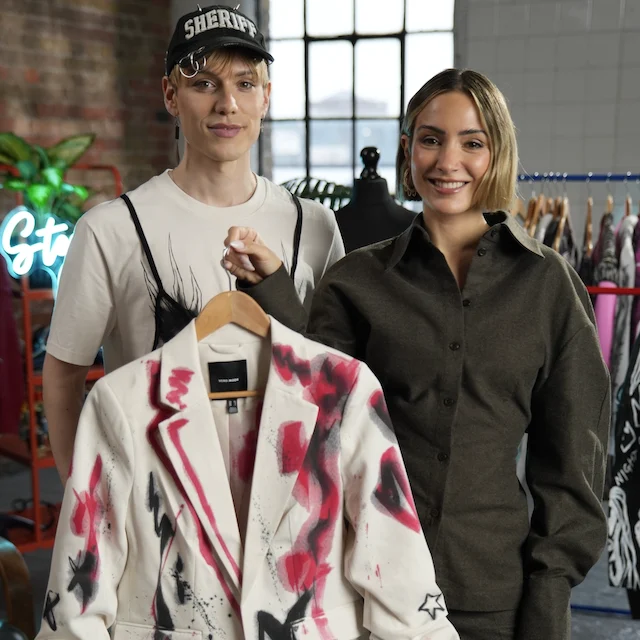
BoohooMAN is one of several brands that is viewed as a pioneer in this arena. Others include JD Sports and Footasylum. The latter, which now has around 2.95m YouTube subscribers, behaves just like a network, complete with recurring series, tentpole moments, and returning talent. Enduring franchises such as Locked In — now six seasons deep — sit alongside newer entertainment formats including Pick My Type.
Josh Barnett, CEO at indie producer After Party Studios, says his company has been creating regular streams of content with betting brand Sky Bet for League of 72, a channel that focuses on the football teams outside the English Premier League, and Super 6, a channel built around Sky Bet’s football scores prediction game. For him, the growth of brand-led channels is a clear attempt to pivot from interruption to immersion.
Former Channel 4 executive Joe Churchill recently launched FAN Club with the express intention of helping brands become broadcasters. ‘With traditional partnerships, you’re paying to access audiences owned by publishers. It’s one-and-done. Your content lives on their platform, and your share of voice is limited. With a brand channel, audiences carry over. You’re building something that snowballs.’
Taf Makopa, who worked with numerous brands at Wall Of Entertainment before launching his own outfit, Mako Studios, says it is vital that content aligns with the interests, culture, and lifestyle of their target audience. ‘I remember at Wall we created a series for Footasylum about struggle meals to engage students. That was a great way to connect the brand authentically to the audience experience.’
Cowshed Collective head of commercial Sarah Hayman agrees that creating a brand channel starts with ‘making content that speaks the audience’s language.’ Brands that are serious about running entertainment channels on YouTube need to be willing to commission formats, nurture talent, and build audiences over time. They need to operate with the logic of broadcasters rather than advertisers.
Platform fluency is another critical consideration. ‘You have to understand YouTube as YouTube,’ Hayman says. ‘Not just what hero content looks like, but thumbnails, labelling, pacing, cuts — how the algorithm responds. A channel needs a clear identity. If YouTube doesn’t understand who you are, it won’t know who to show you to.’
Cowshed Collective’s work with boohooMAN involves creating 10–15 clips per shoot day across multiple platforms, with clippable moments baked in from the start. ‘Having these clippable hooks is often the difference between a format being viable or not. More chances to win. If one clip blows up, the client’s ROI for the whole project can shift instantly.’
After Party’s Barnett stresses that modern brandcasting is inherently multiplatform. Long-form YouTube episodes spawn short-form assets optimised for TikTok, Instagram, or YouTube Shorts. ‘You build the ecosystem from the start. Hero content, cut-downs, behind-the-scenes — it all works together.’
Barnett also stresses the importance of leaning into existing assets. Sky Bet, for example, is sponsor of the English Football League, giving it access to content assets and relationships that can be leveraged on League Of 72. O2, similarly, leverages its deep investments in the live music industry.
Churchill adds that consistency is vital. ‘Start with a manageable drumbeat — one episode per week — and iterate. It’s vital that brands view this as a long game. They are setting out to build affinity and culture, not just push a product.’
ExpressVPN’s legacy YouTube presence focused on functional, educational content. To reach UK 18–24 year-olds through entertainment, it created a separate channel — Express Studios — to house pure entertainment content.
Churchill says ROI from a brand channel is hard to directly quantify. ‘Fundamentally this is about brand love — being present with your audience, constantly top of mind, shifting perception from just a company selling stuff to a personality-driven enterprise that gives something useful or entertaining.’
Fan Club is now working with Primetime Beer, a low-calorie lager targeting young adults, creating an original series called The Low-Cal Cookoff. Unlike the overtly creator-led model used by Footasylum and JD, this is a healthy cooking show hosted by Martin Odell, featuring celebrity guests like England rugby player Henry Slade.
The fastest-growing demographic on YouTube is over-55s. Whether it’s classic cars, astronomy, or cooking, brands targeting older or niche communities can benefit. Examples include Waitrose integrating its Dish podcast into its YouTube Channel, while M&S has populated its channel with formats such as Love That and Table Talk.
For brands put off by the cost, Taf Makopa suggests a co-funding model. ‘Brands can share costs if they are targeting overlapping audiences. If three or four brands speak to the same consumer, why chase the audience separately? Instead, they can co-fund, co-create, and share a single high-quality channel.’ For example, Makopa describes a content collaboration involving boohooMAN, JBL, and Afrikana.
For Churchill, the key point is ownership. ‘There’s a difference between owning an audience and renting someone else’s. If you are building a channel and growing an audience, there’s no middleman between your content and your audience. You can build a direct relationship, a community. First-party data, mailing lists, app downloads — all becomes possible in ways media partnerships simply cannot offer.’
Ultimately, the rise of the brandcaster signals a shift in how value is created. Attention is something to be earned, nurtured, and retained over time. Brands that succeed in this space will be those willing to behave like true media owners — investing in ideas, talent, and consistency, while relinquishing the urge to over-control.