
The television production sector has spent much of the past two years grappling with a question few executives imagined they would be asking a decade ago.
What happens when the commissioning model that underpinned the industry for thirty years no longer provides enough work to sustain the businesses built around it?
Across the UK, production companies have been dealing with the consequences of a market that has become increasingly difficult to predict. Broadcasters continue to commission original content, but budgets are tighter, decision making appears slower and the volume of opportunities available to independent producers has reduced significantly. While premium projects continue to attract investment, many factual producers have found themselves operating in an environment where future revenue feels less certain than it once did.
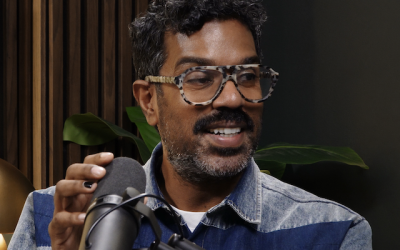
For Andrew Eastel (pictured), Managing Director of Middlechild Productions, the challenge has not been to replace television. It has been to work out what comes next alongside it.
Middlechild is exactly the kind of company that would once have been considered a traditional television producer. The business has built its reputation making factual programmes for broadcasters including the BBC, Channel 4, Channel 5 and UKTV. Its expertise lies in observational documentaries, current affairs and specialist factual programming. Yet over the past year, the company has quietly become one of the more interesting examples of how independent producers are beginning to reposition themselves for a digital-first future. Not by chasing viral content or attempting to replicate creator culture, but by applying traditional production skills to a completely different business model.
At the centre of that strategy sits Gardening with Alan Titchmarsh, a YouTube channel that now attracts hundreds of thousands of monthly views and has built an audience of more than 160,000 subscribers. On the surface it looks like a straightforward gardening channel fronted by one of Britain’s most recognisable television personalities. Viewed through a production industry lens, however, it represents something much more significant.
The project did not begin with a broadcaster commission or even with a programme idea. It began with an assessment of where future revenue opportunities might exist.
Like many producers, Eastel and his team recognised that advertising revenues have fragmented across a growing number of platforms. Audiences have followed. The challenge therefore becomes identifying categories where large, passionate communities exist but where the market remains underserved by high-quality content. Gardening emerged as one of those opportunities.
It is a category with enormous consumer interest, significant commercial activity and a wealth of potential brand partners. It is also a category built around utility. People do not simply watch gardening content for entertainment. They actively search for it because they want answers to specific problems. How do I revive a lawn? What should I plant in spring? When should I prune a hedge?
That distinction matters because it changes the relationship between content and audience.
For decades, television producers have been trained to think about programme development first. Come up with a great idea, find a broadcaster, secure funding and build an audience. Digital platforms often operate in reverse. The audience need comes first. The content exists to satisfy that need.
It is a subtle but important shift and one that many traditional producers are still learning to navigate.
The significance of the Alan Titchmarsh project extends beyond gardening. What Middlechild has effectively created is a piece of owned intellectual property that sits outside the commissioning ecosystem. The company is no longer dependent on a broadcaster to determine whether the content exists. It controls the production, the distribution strategy and, crucially, the audience relationship.
That audience relationship increasingly looks like the most valuable asset in the modern content economy.
One of the recurring themes emerging across the digital-first sector is that successful businesses are built around communities rather than individual programmes. Television producers historically created content for someone else’s platform. The new generation of content businesses are building direct relationships with audiences and then monetising those relationships in multiple ways.
The YouTube channel is only one part of the equation.
Advertising revenue is one revenue stream. Brand partnerships are another. International distribution creates further opportunities. Content can be repackaged and sold into traditional broadcast markets. Live events, publishing, merchandise and sponsorship all become potential extensions of the same core intellectual property.
In many respects, this looks less like television production and more like media entrepreneurship.
That does not mean traditional production skills have become obsolete. If anything, Eastel believes the opposite is true.
One of the misconceptions surrounding the creator economy is that established television producers somehow missed the opportunity. Yet production companies possess capabilities that many creator-led businesses spend years attempting to build. They understand compliance, rights management, duty of care, editorial processes, talent relationships and international distribution. They know how to produce content that can move between platforms and markets.
The question is not whether those skills remain valuable.
The question is how they are applied.
Middlechild’s answer has been to launch Wild Child, a dedicated digital division designed to develop digital-first brands alongside the company’s existing television business. The strategy is not built around replacing broadcast commissions. It is based on diversification. Television remains a core part of the business. Digital-first IP becomes an additional pillar rather than an alternative one.
That distinction is important because it reflects where much of the production sector now appears to be heading.
Despite repeated predictions of television’s demise, broadcasters continue to require large volumes of content. Premium factual programming continues to attract audiences. Public service broadcasters remain important commissioners. Yet increasingly the industry appears to be moving towards a hybrid future where content businesses operate across multiple ecosystems simultaneously.
The most successful producers of the next decade may not be those who secure the largest commissions. They may be the companies that learn how to combine commissioning revenue with owned intellectual property, direct audience relationships and platform-native distribution strategies.
If that proves to be the case, then projects like Gardening with Alan Titchmarsh may come to be viewed as something more than a successful YouTube channel.
They may represent an early blueprint for what the next generation of production companies looks like.