TV producers are caught on the horns of a dilemma. The broadcaster commissioning model they have historically relied on is in trouble. International co-productions and distributor advances have alleviated some of the stress, but increasingly it has become obvious that there is just less money to greenlight shows.
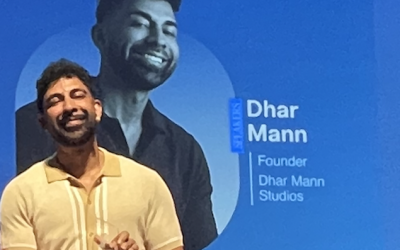
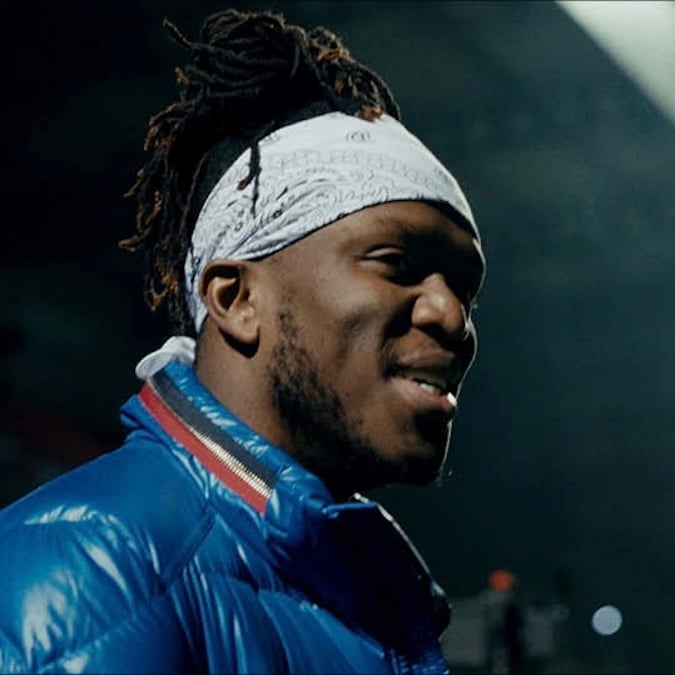
An obvious response is to embrace digital-first production, where the likes of Dhar Mann, MrBeast and The Sidemen seem to be making a mint. But the transition is not as simple as these superstars make it seem. While producers have the skills to make content for social platforms, they have quickly learned that the dynamics of their traditional business do not easily translate to platforms.
What becomes clear to anyone who tries to bridge the divide is that the new content economy has its own revenue logic, audience behaviour and creative grammar.
Thom Gulseven, co-founder of digital-native production studio Strong Watch Studios, is one of several pioneers who has made the transition from traditional production to digital-first. For him, the ability to make a successful shift starts with the recognition that it is not about surface-level change – it requires a structural rethink. “I used to be really skeptical of the phrase ‘think like a creator’… because to me it conjured up images of people running around shooting content on their phone. But I’ve come to realise that this is really what it boils down to – producers need to learn from the models that creators have spent the last 10- or 20-years perfecting.”
There are three key dimensions to this – economically-viable production, agile cross-platform distribution and an entrepreneurial approach to revenue generation. On the issue of production, it starts with a new mindset, says Gulseven: “Instead of thinking about how you make your current models cheaper, you need to think – what would a creator do? For example, a creator wouldn’t bring in an enormous team from day one. They’d get something from idea to screen as quickly as possible.”
In TV, value is often equated with longer development, longer edits, longer delivery cycles. But in digital, time is frequently the enemy, says Gulseven. “Creators typically get their ideas out as soon as possible. True, they got to this place out of necessity… but they also understood the importance of creating a minimum viable product so they could build an audience. All the bigger stuff comes later.”
For traditional producers, this can be a difficult adjustment – because they are used to delivering content fully formed. But in digital, growth is iterative, with audience-building often prioritised over production value. “Creators have taken the view that the product won’t necessarily be better by being in the edit for ages. And what they have discovered is that social audiences often like unpolished authenticity,” says Gulseven.
This has implications for the production process. For the most part, digital-first production does away with multi-camera setups, expansive locations, cinematic lighting. Instead, shows are designed to be made frequently, efficiently, flexibly – and increasingly with the use of AI. Sets are modular. Lighting is pre-rigged. Episodes are batched. The goal is not to maximise spectacle, but to maximise output.
Digital-first producers quickly become adept at decoding audience feedback, working out where audience perceive value and where they don’t. As Gulseven frames it, the test is disarmingly simple: “Will this get me more views? We ask that every time. Yes, we could do it this way… but is it more expensive. Will it result in more people enjoying it? You’d be surprised how often the answer is no.”
Streamlining production comes alongside rethinking teams, says Gulseven, though he rejects the suggestion this means reduced rates for talent. “Digital is often used as a byword for cheaper – but an individual’s time isn’t cheaper.”
Instead, the change is structural. Digital-first teams are smaller, flatter and multi-skilled. A producer may direct, shoot and oversee edit. Development producers carry ideas from pitch to publishing. “A producer might come up with the idea, develop it, pitch it, shoot it, and see it through the edit – even the thumbnail and packaging.”
Intriguingly, says Gulseven, the end result of this process isn’t just cheaper production but quality work. “Often, you get a better product because the person who had the idea is the person seeing it through… you’re not diluting that initial idea.”
Zandland founder Ben Zand agrees that a key difference between traditional and digital production is pace. “Speed is the difference in many ways… you need to make decisions a lot quicker. You need to pivot a lot quicker. And timelines are crunched.”
Where traditional television development can stretch across months or years, Zand describes a radically compressed cycle: “A concept can be ideated, shot, edited, released, and then another follow-up doc can be made within about five weeks… whereas the same doc for a TV channel might take a year.”
That speed has creative consequences. It forces producers to abandon the idea that premium value is tied to polish. One of his latest productions is a one-off film about incels who rent girlfriends, which topped 380k views after one month. “We wanted to get it out quickly. So the grade and audio mix aren’t great, but nobody really cares.” There’s a similar philosophy with his new weekly show Zandland TV. “From a production point of view it is a relatively lo-fi chat show, a kind of vodcast. But for me the priority is to share our thoughts and build a heavily invested audience.” Zand believes that this rawness can actually be an advantage. “Social audiences often like content that feels a more friendly. I think we’re going to see more demand for authenticity as AI-produced content becomes more prevalent.”
Alongside speed, Zand says digital-native producers have also learned how to balance attention to data with gut instinct. “YouTube gives you an abundance of information. You start to see how people react to content… and it’s important that you react to that. But at the same time, you need to be entrepreneurial. I’m always thinking – I need to have 70% of content that I know will work alongside another 30% that’s more risky, that might get me in front of new audiences.” Another crucial balancing act, Zand observes, is between the need for executional speed and strategic patience. While production cycles are shorter, viral success is elusive – and not necessarily that beneficial if it comes along. “When you start, you don’t really know what works and what doesn’t work for a couple of months. “You’re creating a brand and a community that can ultimately support a business… and the truth is you can’t do it in six months, probably not even a year.”
A steady stream of ‘traditional’ producers are now making serious moves into digital-first production. Middlechild, for example, has created a YouTube channel with gardening legend Alan Titchmarsh and also launched Wildchild Studios, a new label dedicated to pushing creative boundaries in the digital world. By the end of 2026, Wildchild aims to be running five original YouTube channels.
Andrew Eastel, Middlechild managing director, says the shift has not always been easy – particularly for a company that prides itself on its observational documentary output. “Like most producers, I was slightly terrified by the fact that we were going away from our standard model. But over the last couple of years, I think we’ve gone full circle now and it’s become quite invigorating and entrepreneurial and exciting… the possibilities suddenly feel endless.”
For Eastel, one of the biggest differences with digital-first is control. “To be able to dictate our future as a business is genuinely quite refreshing – because in traditional broadcast television we’re at the behest of other decision-makers most of the time.” The big issue when testing digital-first production, says Eastel, “is how do we fund this? Initially, I think people assume it is about whatever they’re generating from YouTube… but it just isn’t feasible to rely on YouTube revenue alone.” Instead, Eastel says, producers need to flip their thinking – from content-first to model-first. “We started thinking about what we could do as more about business models than content. What’s the strategy? Where’s the revenue coming from? The decision about content comes later, which is an alien thought for most people in our industry.”
The clearest manifestation of this for Middlechild is its emphasis on talent-led channels in advertiser-friendly verticals, where communities that can support multiple revenue streams. “Gardening ticked that box for us… expert advice, a big name, and brands that want to spend money in that space. Now we have a brand and a community that we can now try to generate more revenue from… merchandise, membership, podcasts… and I think the beauty of that is that we have that control.” Eastel is clear that there’s no silver bullet. Resources are constrained – especially for companies still servicing broadcast. And producers need to be willing to wait for ROI: “It’s not easy… it definitely requires some investment of money and time.” Which is why scale matters. “If we have five channels doing what we’re doing with Alan Titchmarsh… then suddenly we might start seeing a decent profit.”
There is still an outstanding question for Middlechild, which is whether the new content economy can support the kind of work it is known for. “We’re talking more about how we could take what we love doing, which is making documentaries… and find models that allow us to make those documentaries in a way that funds itself. That’s where you need to start thinking about working with brands, for example.”
One upside for indie producers is that they are not alone in navigating this new world. Also forging a path are distributors and broadcasters, some of which have turned out to be useful allies in navigating the new content landscape. Quintus Media, for example, started out as a traditional distributor before building out its own slew of digital-first documentary channels. Now it operates as a hybrid business, commissioning producers to service both sides of its business – in the process offering a vital bridge between traditional TV and the creator economy. Creative director Adam Jacobs says his focus is on co-producing content that can work across both TV and YouTube. Budgets are tightly controlled, but the relationship with producers is collaborative. “Part of my job is to work very closely with the producer to make that budget stretch as far as it can.”
There is no rigid ‘toolkit’ or formula. Instead, Jacobs has embraced what he sometimes refers to as “guerrilla commissioning” – a stripped-back, problem-solving mindset where creativity is applied as much to logistics as storytelling. “This approach isn’t for everybody. But you can make really cool shows for not much money.” In practical terms, this may mean minimising travel, piggybacking on existing shoots, or using local crews instead of flying teams across the world. “It’s a very creative conversation… how are we going to get a show made on this amount of budget?” He cites Beyond Borders, a series built around archive footage shot by Irish indie Peninsula. “It’s great footage. We paid for the edit and post and created five episodes for YouTube. It rated well then sold on to A&E Networks EMEA and a few others.”
Echoing Gulseven and Zand, he says unique access can be more valuable than high production spend when it comes to engaging with social audiences. He singles out Enter At Your Own Risk, a collaboration with freelance producer Joel Ross about dangerous locations such as poverty-stricken parts of Cape Town in South Africa. Here, the key was tapping into on-the-ground expertise. “If you hire a local crew… they can get into places and build trust in a way you might not be able to.”
Jacobs agrees that one of the biggest adjustments for producers is speed. Without the need for broadcaster approval, projects can move from idea to production in weeks. He also backs the importance of data: “We aim to give the audience more of what they love – based on what we learn from the data,” says Jacobs. Ideas that fall outside this approach are treated cautiously. “I might get something that’s a little bit left field… it might work. But there are times where we just know it won’t work.”
Typically, Jacobs starts by commissioning a pilot, allowing both Quintus and producers to test ideas without overcommitting. The goal, however, is to unlock bigger opportunities. For producers, this creates a different kind of risk-reward equation. On occasion, projects may function as loss leaders – opportunities to test ideas, build relationships or learn the model. Jacobs acknowledges that dynamic. “Sometimes producers are willing to just give it a go, and see what happens.”
Even when projects underperform, the learning can be valuable, he says. “In hindsight, you can analyse it… and realise why it didn’t work,” he says.
While Quintus content is designed to work across platforms, Jacobs stresses that shows need to be produced with social firmly in mind. “At the back of my mind, I’m always thinking, how is this going to work for YouTube?” he says.
Watch time is very important, he explains, “You don’t want the same person talking to camera for five minutes, even if they’re compelling.” Similarly, titles and thumbnails are not afterthoughts but central to the commissioning process. “I’m always thinking… how can I ensure the audience keeps watching. The longer they watch, the more ads they’ve seen… and then obviously they’ve paying for the production.”
Looking ahead, Quintus is continuing to evolve its model – including experiments with more creator-led formats and shorter digital-only content aimed at younger audiences. The ambition is to build networks of contributors who can operate within defined formats. “We’ll give them the brief… they find the story… and they self-shoot it. This world is all about being flexible, collaborative and creatively resourceful.”
Another significant player seeking to bridge the divide is Hearst Networks EMEA, which recently launched digital first division Hearst Canvas, led by executive producer Sam Pearson. Pearson describes Hearst Canvas as intentionally unbound from traditional TV structures. “It allows us to go global, to produce at any duration, to work with new partners, across any theme and genre… so it’s an exciting area for us.”
That said, there are rules, says Pearson, for those that want to generate a return. “In the new world, we need to back things that are returnable. We need to know that the partnerships are long-running and that everyone’s motivated to work on the project for years and years… because that’s what the audience wants.” As a blueprint, he points to Hearst’s partnership with Spirit Studios, to develop and produce a digital-first slate of shows focused on history. The goal is to create documentary depth content blended with personality-driven, entertaining storytelling.
For traditional producers making their first tentative steps, he advises against over-extension. “Focus on your core areas of expertise – don’t assume you can do everything. Where I see mistakes is when producers spread themselves too thin.”
He also stresses the importance of taking a cross-platform perspective, recognising that audiences move between platforms and formats depending on their mindset – and that sometimes one platform (eg TikTok) can direct them towards another (eg YouTube). “One person might consume the same piece of content in different forms depending on their mood. So you need to be platform agnostic… making sure you’re finding the audience everywhere that they are. At a later point, it’s possible that one priority platform will emerge – and that’s when you double down.”
Pearson is reluctant to advise that producers self-fund social pilots – but recognises it is an option. “I wouldn’t necessarily suggest that as advice straight off, because of the cost. But I see a lot of producers launching podcasts and YouTube series… and there is no question that their decision-making will be much more in tune with the digital landscape as a result – even if they never generate profit…”
Better is to find a well-resourced collaborator like Hearst Canvas, he says, which can act as a scaling partner – not just a content commissioner. This is a compelling observation – given that the real opportunity in the creator economy is not the content itself but the community it creates: “We’re not just a publisher, we’re a platform manager and a conduit to relationships with sponsors, distributors etc. If your proof of concept works, then live events, publishing – it all becomes possible.”
Six takeaways for the Digital Shift
1 Rethink the model
Digital-first isn’t a distribution tweak – it’s a structural reset. Success depends on new production logic, audience behaviour and revenue models.
2 Prioritise speed over polish
In social ecosystems, momentum matters more than perfection. Launch quickly and learn fast – audience growth comes before refinement.
3 Build lean, multi-skilled teams
Small, agile crews outperform large productions. Creators collapse roles, preserving vision and reducing cost.
4 Balance data with instinct
Performance data sharpens decisions, but creativity still needs risk. The winning formula: consistent formats, controlled experimentation.
5 Design revenue beyond views
Ad income is only the start. Robust businesses are built on IP, brand partnerships and diversified income streams across platforms.
6 Build IP, but stay iterative
Ownership is critical – but platforms still dictate reach. Keep testing, learning and pivoting in response to algorithms and audience behaviour.