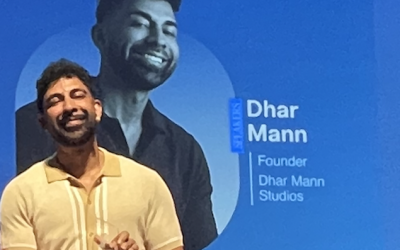
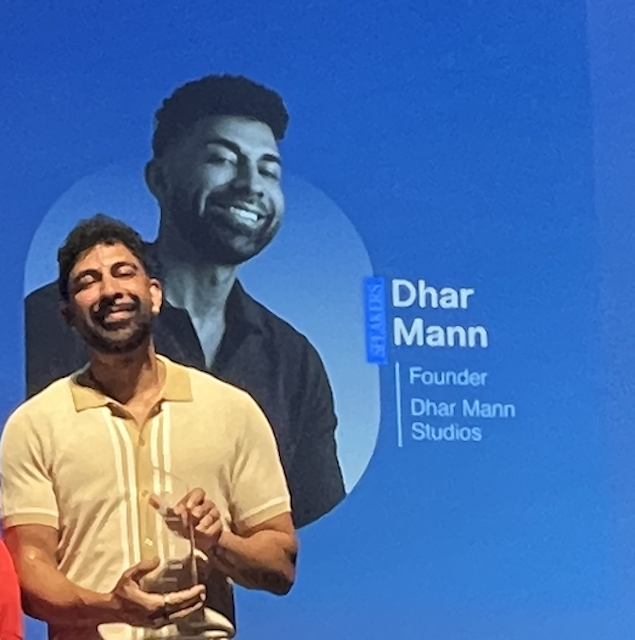
From producing videos on iPhones to running a global entertainment operation, Dhar Mann has followed an unconventional route to success. At MIPCOM Cannes, he and CEO Sean Atkins shared some of the lessons behind that journey – from understanding audiences and controlling costs to attracting brands and staying motivated.
Eight years ago, Dhar Mann was producing videos in a small Los Angeles apartment. Today, Dhar Mann Studios has around 170 million followers worldwide, produces five half-hours of scripted programming every week and has partnerships with companies including Disney, Fox Entertainment and Samsung TV Plus.
The business is expanding again, with a new four-acre production campus in Los Angeles, Creator City, designed to accommodate multiple productions and collaborations with brands and other creators. Speaking at MIPCOM Cannes, Mann and CEO Sean Atkins, a former president of MTV, discussed how the company has developed from a YouTube operation into a diversified entertainment business.
For creators, producers and entrepreneurs looking to build their own digital businesses, their conversation offered eight particularly useful lessons.
Start with a mission, not a business model
Mann’s earliest productions were made on iPhones, without professional equipment or formal filmmaking training. He recalled prospective collaborators visiting his apartment, seeing the rudimentary setup and immediately walking away.
There were plenty of occasions when he considered abandoning the venture. What kept him going was a belief in the purpose of his storytelling.
“I started because I wanted people to feel seen. I wanted to tell stories that matter. And that mission kept me going,” he explained.
His advice to aspiring entrepreneurs was straightforward: “You don’t need to have a lot of money. You don’t need to have a lot of resources. You don’t need to have everything figured out. You just need a reason to keep going.”
Atkins believes that sense of purpose also explains why the business developed differently from a conventional production company. Mann was not initially trying to become a film director or studio executive. He wanted to communicate with audiences, and built the organisation around that ambition.
The lesson: A clear creative purpose can provide direction when resources are limited, particularly during the difficult early stages of building a business.
Don’t dismiss markets that established companies consider beneath them
Atkins argued that successful new businesses often emerge in markets that established players have overlooked or dismissed.
He drew comparisons with Southwest Airlines and Walmart, both of which developed business models that challenged conventional industry assumptions.
The same pattern has occurred repeatedly in entertainment, he suggested, as established companies initially underestimated cable television, internet distribution and creator-led content. “Your signal that something’s most likely to win is that the incumbent thinks it’s beneath them,” he said.
Mann illustrated the attitude with an encounter on an aircraft. He told a fellow passenger about his substantial studio operation, its audience and production output. She appeared impressed until he revealed that its principal distribution platform was YouTube. At that point, he recalled, she effectively ended the conversation.
For Atkins, such attitudes create opportunities for businesses willing to serve audiences that traditional competitors have failed to prioritise.
The lesson: Don’t judge an emerging market by its prestige or by how established companies regard it. Look at audience behaviour and whether a viable business can be built around it.
Make speed a competitive advantage
One of Dhar Mann Studios’ defining characteristics is the speed at which it produces content. Mann explained that one production division can take a project from script to screen in just seven days. Even the company’s longer production cycle takes approximately 21 days.
That contrasts with traditional development models in which producers might wait years to discover whether audiences respond to a project.
Mann questioned how anyone could confidently predict audience tastes two years ahead when the media environment changes so quickly.
The company’s production system also allows it to experiment with different formats, genres and platforms. Its output spans short-form, mid-form and long-form programming, both scripted and unscripted.
Atkins added that operational discipline is essential to making this work. Writers’ rooms, production facilities and other resources are organised for continuous use rather than conventional stop-start production cycles.
The lesson: Speed is not simply about making content cheaply. It allows creators to test ideas, learn from audiences and adapt before opportunities disappear.
Listen to your audience – even when the feedback surprises you
Atkins described a revealing experience involving a Halloween-themed series.
The studio’s data suggested that Halloween content performed particularly well, so the team developed a new project and released a trailer. The response was exceptionally strong, but viewers began enthusiastically discussing what they believed was an upcoming Netflix series. The programme was actually intended for YouTube.
The company revised its trailer to make the YouTube destination clearer, but the audience continued talking about Netflix.
Atkins concluded that viewers were not necessarily demanding that particular programme on Netflix. Rather, they had come to expect Dhar Mann content to be available across the platforms they used. That insight helped reinforce the company’s move beyond its original distribution channels.
It also illustrates the value of looking beyond headline viewing figures. Audience comments can reveal expectations and assumptions that conventional performance data does not capture.
The lesson: Use data to identify what is working, but pay close attention to what audiences are actually saying. Their expectations may reveal opportunities that weren’t part of the original plan.
Build production economics around the platform
Atkins challenged the assumption that creator-led content is somehow inferior because it operates with different budgets from traditional television.
He argued that the real achievement is producing content that satisfies audience expectations while remaining commercially sustainable.
“Creators are making content that is right-sized to the audience expectations and the economics of that platform,” he explained.
Traditional entertainment companies have often developed cost structures around particular distribution models. Creator businesses, by contrast, have had to operate in an environment where audiences can be enormous but revenue per viewer may be relatively modest.
Dhar Mann Studios has built its operation around those conditions rather than attempting to reproduce Hollywood’s production model.
Atkins also stressed the importance of protecting the distinctive working culture that Mann had established. Bringing in experienced executives should not mean importing every convention of the traditional entertainment business.
The lesson: Design the production process around the revenue available and the experience audiences expect. A larger budget or more elaborate production process is not automatically a better business model.
Diversify your revenue before you have to
Mann revealed that when Atkins joined the business around two-and-a-half years ago, approximately 95% of its revenue came from YouTube and Facebook.
That proportion has since fallen below 40%, with the company expecting it to decline to around 30% next year.
The shift reflects expansion into commissioned programming, platform partnerships, brand collaborations and other commercial activities.
Mann credited Atkins with helping identify opportunities that had previously been overlooked.
Indeed, the two originally met when Atkins was exploring a possible acquisition of the company. During due diligence, Atkins asked questions about additional revenue streams, repackaging content and serving other platforms.
Rather than waiting for a transaction, Mann began implementing some of those ideas immediately. The resulting growth helped persuade him that recruiting Atkins would be more valuable than selling the business.
The lesson: A successful audience business should not become permanently dependent on a single source of income. Existing content, production capabilities and audience relationships may have commercial applications beyond the platform where they originated.
Make brands part of the story, not an interruption
Mann believes one of the creator economy’s biggest commercial challenges is the transactional way brands have traditionally worked with digital talent.
He described receiving advertising briefs focused on budgets, reach and deliverables, with relatively little opportunity for creative collaboration.
That approach can produce awkward sponsorship messages that interrupt rather than enhance content. Mann offered the example of a character crying during an emotional scene, only for the creator to interrupt the story with a promotional reference to tissues.
His preferred approach is to work directly with brands to find ways their products can feature naturally within the narrative.
The company has developed an in-house agency working with more than 50 leading YouTubers, allowing it to offer advertisers coordinated creative campaigns rather than isolated influencer placements.
Creator City will take that thinking further. Its planned sets will incorporate real brands and retail environments, enabling creators to produce stories in recognisable commercial settings.
Mann said brand-related business had become one of the studio’s fastest-growing revenue areas.
The lesson: Creators can offer advertisers more than access to followers. Their understanding of storytelling, audiences and platform culture can make them valuable creative partners.
Combine creator instincts with traditional industry expertise
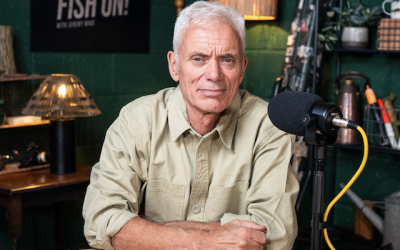
One of the most interesting themes was the relationship between Mann and Atkins themselves. Mann acknowledged that his original approach was deliberately scrappy, relying on instinct, speed and a willingness to experiment. Atkins brought experience in managing larger entertainment organisations, developing partnerships and identifying additional revenue streams.
Mann said he would not have been able to take the studio to its current scale without Atkins’ contribution. But the learning had worked in both directions.
The company’s expansion illustrates that creators do not necessarily need to abandon their original methods to operate at scale. Instead, they can combine those methods with the commercial and organisational expertise of the established entertainment industry.
Mann believes the biggest opportunities will go to companies that can successfully bring the two worlds together. “I think the people that win in the space are the ones that actually create the bridge between traditional and creator,” he said.
The lesson: As a creator business grows, the right partners and executives can provide skills its founders do not possess. The challenge is to add those capabilities without losing the culture, agility and audience connection that made the business successful in the first place.