
Digital-first studios and creators are rapidly reshaping the media, entertainment, and technology landscape. Built natively for platforms like YouTube, TikTok, and Twitch, these studios don’t simply distribute content online – they are designed around data, community, and algorithmic discovery from day one. Now, with the accelerating integration of artificial intelligence, their influence is poised to expand even further.
Unlike traditional producers, digital-first studios operate with lean teams, real-time feedback loops, and direct audience relationships. AI tools supercharge this model: automating editing and localisation, optimising thumbnails and titles, generating scripts and virtual hosts, and analysing audience behaviour at granular levels. What once required a full production pipeline can be prototyped, tested, and scaled in days.
This shift raises profound questions. Will AI-driven workflows democratise storytelling or concentrate power among creators who best understand data and automation? How will intellectual property evolve when synthetic media and virtual influencers become mainstream? And what happens to traditional studios as digital-native brands capture global audiences without broadcast infrastructure?
We asked some of the early pioneers in AI-powered content creation to share their thoughts about the impact of this rapidly-evolving tech revolution.

Daniel Efergan
Creative director; innovation consultant
How are studios using AI today? Most conversations start with efficiency – studios are under real economic pressure. But alongside that is a strong concern about protecting creative integrity. There are many areas where AI can support creativity without replacing it, particularly in understanding and managing the data flowing through a studio. Used well in pre-production, it can enable better decision-making, asset reuse and more efficient pipelines – without directly interfering with the creative itself.
What are the risks? Companies need to be clear about what’s creatively “precious” to them and protect it. Generative AI is already becoming embedded in creative practice, so the challenge is setting boundaries – ensuring teams can stay true to their creative identity while using AI to support everything around it.
What is your view on personalised content? Hyperpersonalisation risks fragmenting shared cultural experiences. If everyone is watching something slightly different, we lose the ability to talk about “that show” together. At the same time, it creates real opportunities to serve smaller, underserved communities – enabling content that wouldn’t previously have been viable.
How do you view originality and copyright? Originality is still fundamentally human-led. AI can support the creative process, but it has poor taste without human direction – avoiding the sense of “AI slop” requires strong creative judgement. Copyright is far more complex. The boundaries of what counts as “AI-generated” are still unclear – whether it’s fully prompt-based content, or workflows where AI is used to enhance, adapt or transform existing material.
There are also ongoing challenges around training data. While some tools are moving towards more transparent, rights-cleared datasets, it remains difficult to fully separate AI development from copyrighted material. Progress will likely come through a mix of policy, commercial pressure, better tracking technologies and evolving industry standards.
What excites you most? What’s most exciting is that creative people effectively have new “superpowers.” Artists are no longer limited to traditional roles – they’re becoming coders, pipeline developers and tool-builders. Some of the most interesting work isn’t just using GenAI to create images, but building entirely new workflows and tools in a matter of weeks to bring ideas to life. That shift has huge implications for how content gets made.

Aaron Sisto
Co-founder & CEO, Chronicle Studios
How is AI shaping audience engagement? AI is already having a profound impact on content consumption. Discovery is becoming significantly harder, with near-infinite friction as the volume of content continues to grow.
Authenticity, quality and voice still matter – but they are no longer enough on their own. Audience acquisition and the ability to reach and understand specific viewer cohorts are becoming the deciding factors for success.
What does this mean for creators? As production time and costs fall for all but the most bespoke, high-end content, around 99% of creators can iterate faster and deliver content on demand for highly niche audiences.
This shift is improving the economics of on-platform and long-form content, making more models sustainable than before.
Will AI disrupt monetisation? Yes. If audiences can access high-quality content in any format, on any device, whenever they want, it reduces the need for traditional distribution models.
What innovative applications are you exploring? Chronicle is building the first agentic system to automate audience acquisition and end-to-end channel management across social.
These AI agents act as “social media cartographers,” treating social as a real-time cultural atlas and a primary map for understanding shifts in audience behaviour.
A key part of this approach is bypassing the algorithm – testing content and products directly with target audiences, including A/B testing outside traditional systems.
Ultimately, the goal is to better identify and activate niche fandoms, which are becoming the most valuable form of audience.
What are the key implications? There is a clear move away from vanity metrics like high follower counts toward deeper engagement. In many cases, a smaller but highly engaged fandom can outperform large-scale, passive viewership driven by viral reach.
How are audiences reacting to AI content? Reactions remain mixed. Some AI-native creators are already building large, highly engaged fandoms.
However, many traditional creators and studios that transition to AI workflows have faced serious backlash from their audiences.
Performance also varies across platforms, influenced by both algorithmic behaviour and audience perception, meaning success with AI content is far from uniform.

Eline van der Velden
Founder & CEO, Particle6 & Xicoia. Creator of Tilly Norwood (pictured)
How are you using AI creatively? AI is a creative amplifier. It speeds up the boring parts so we can spend more time on the interesting ones.
We use it for rapid prototyping – testing characters, visuals, scripts and tone in hours instead of weeks, often generating multiple versions of an idea to see what sparks something.
But taste and intention are still human. AI can generate endlessly, but it can’t decide what matters. The real risk isn’t AI replacing creativity – it’s people accepting the first mediocre thing a machine produces.
Will AI create new revenue streams? AI enables scalable storytelling – personalised narratives, interactive characters and dynamic worlds.
With projects like Tilly Norwood, we’re exploring characters as persistent digital personalities rather than one-off appearances, opening opportunities in virtual experiences, licensing, live interaction and narrative universes.
As production costs drop, value shifts from production to ideas, IP and audience connection.
How do you handle ethics and copyright? Transparency is key. If you’re experimenting with AI, say so – audiences are generally curious, they just don’t like feeling misled.
We also have strict rules around copyright and data usage – not uploading copyrighted material or prompting against specific works or people – alongside strong legal oversight.
The goal isn’t replacing artists, but building tools that allow them to do more ambitious work, similar to how performance capture expands what performers can do rather than removing them.
Most innovative project? Creating AI characters like Tilly Norwood has been particularly interesting, sitting between acting, animation and machine learning. The performance is human, but the character can exist digitally in ways a traditional actor can’t – evolving, interacting and appearing across formats almost instantly. We treat projects like Tilly as experimental vehicles to explore what’s possible.
What trends excite – or concern – you? Real-time AI characters and worlds are especially exciting, as storytelling becomes more interactive rather than purely linear. What gives me pause is the volume of low-effort content these tools can create.
But that also creates opportunity – when everything is automated, original ideas stand out even more. AI doesn’t originate the ideas; it’s about humans working with these tools to reach a new level.
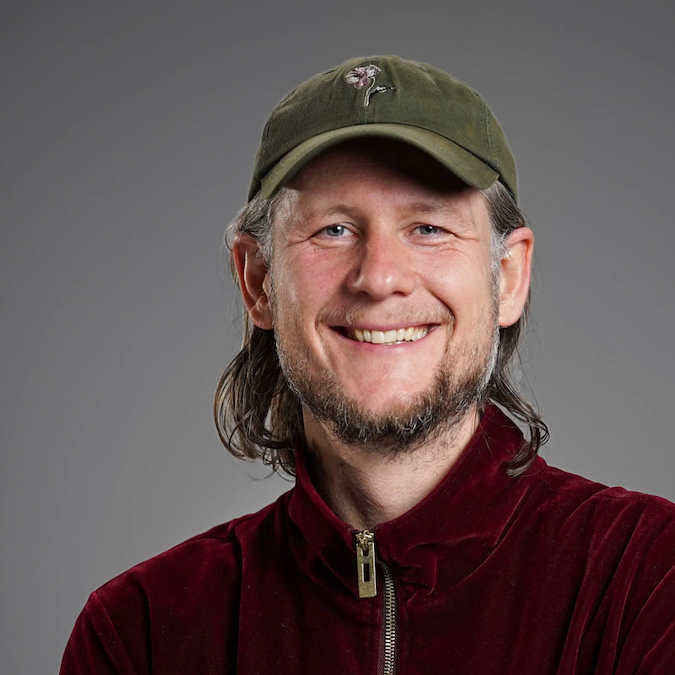
Hannes Jakobsen
Managing director, Chapter 41
How are you leveraging AI? AI is at the absolute core of our creative process, from ideation through to post-production.
We focus on three areas: developing original IP, building AI-first VFX pipelines, and creating tools to streamline production for both ourselves and the wider industry. We also rigorously test these tools in our own workflows.
A recent project, The Shattering, went from concept to completion over a single weekend with two people – something that would have taken significantly longer using traditional methods. Overall, AI has accelerated creation exponentially.
Importantly, our goal is not automated content, but enhancing human creativity.
What must remain human? Two things: intent and taste. Intent is the spark of deciding something should exist in the first place. Taste is the judgment required to shape and curate output into something that creates real emotional resonance.
Will AI dilute authenticity? Low-effort content – what’s often called ‘AI slop’ – has always existed in different forms. AI just makes it more visible because creation is now so accessible.
If brands or creators rely too heavily on automation without strong curation, authenticity and brand voice can suffer. But that’s not an AI problem – it’s a question of creative direction and taste.
What challenges have emerged? Generative AI lacks pixel-perfect control. It behaves more like directing a human actor than working with traditional VFX – changing one detail can subtly affect others.
The most successful creators are those who embrace this unpredictability and explore the creative tension between human intent and these more fluid tools.
Will AI disrupt monetisation? Yes. AI continues a shift that began with platforms like YouTube – democratising production and distribution.
This creates opportunities for digital-first studios to take end-to-end control of IP development, distribution and monetisation, while also servicing traditional players with new production approaches.
At the same time, competition will intensify, with traditional media increasingly competing not just with each other but with agile studios and individual creators.
What excites you most? We’re excited by world models such as Google Genie 3, which could enable fully navigable 3D environments on demand.
This opens up two major opportunities: creating personalised, interactive worlds and transforming virtual production, where environments, lighting and physics could be generated dynamically during a shoot.
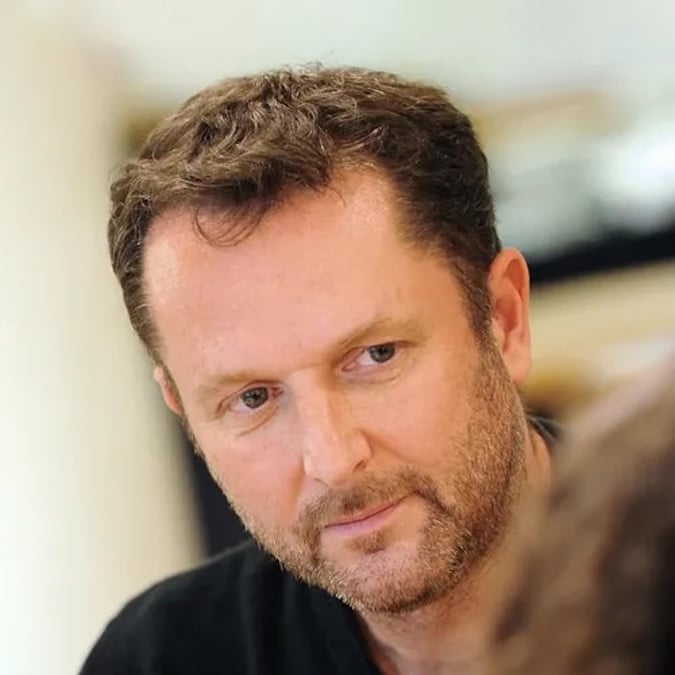
Guy Gadney
Founder & CEO, Charismatic.ai
How is AI being leveraged in content creation? AI has the capability to impact every aspect of production – from idea generation to the end broadcast format. The best examples are when it’s used with a specific goal in mind, rather than applied as a blanket across everything. What we’re seeing currently is people using AI to replicate existing shots, formats and concepts. The real power will come when we move beyond that.
How is AI changing production workflows? Working with AI is very different from traditional workflows. We often get nearly-fully rendered versions straight away, bypassing linear build-up processes, and then dynamically refine them. This can surprise directors used to a slower, step-by-step approach, but it ultimately allows creative teams to stay in control of their vision and evolve final elements once they see them on screen.
How has collaboration changed? Our team spans writing, design, sound, tech and AI, and constant collaboration and shared learning are essential. We also launched CineProLab to share this knowledge more widely, including courses and resources that are now being used by filmmakers and creatives across the industry.
Do you see AI opening new narrative landscapes for digital-first studios? There is huge power in immersive and personalised experiences. Systems like Google’s Genie are likely to bridge playable 3D worlds and storytelling in entirely new ways.
How are you addressing ethics and copyright? We are the only creative AI studio to employ a digital ethicist during the design phase, ensuring we consider both intended and unintended consequences. There is still a huge amount of work to be done. The UK needs clearer leadership here – without it, there’s a real risk that innovation will outpace responsibility and leave the creative industries without the certainty they need to compete globally.
Most innovative project? A Christmas ad for Russell & Atwell chocolates that we pitched, produced and launched in just 33 hours. It demonstrated how high-quality work can be created at speed, and open up conversations around sustainable production strategies and microdrama formats.
What trends excite (or concern) you? Real-time generative rendering is the key milestone. It will enable reactive, immersive storytelling at scale. At the same time, I’m concerned about the consolidation of power among a small number of global tech players – and the fact that much of that power sits outside the UK.
Key takeaways
AI is shifting value from production to creativity. As production becomes faster, cheaper and increasingly automated, competitive advantage is moving away from execution and toward ideas, taste and creative direction.
Speed and scale are redefining how content is made. What once took full teams and long timelines can now be prototyped, tested and launched in days – enabling rapid iteration and more responsive storytelling.
Audience connection is the true differentiator. In a landscape of near-infinite content, success is less about reach and more about building deeply engaged, niche communities.
New formats and models are emerging. From persistent digital characters to personalised narratives and interactive worlds, AI is unlocking entirely new ways to create, distribute and monetise content.
Opportunity and risk are rising in parallel. While AI lowers barriers and expands creative potential, it also raises urgent questions around authorship, authenticity and the concentration of power – making responsible adoption critical.