For years, conversations about the future of television have been dominated by what the industry is losing. Commissioning has slowed. Budgets have tightened. Broadcasters have become increasingly risk averse. Entire genres that once sustained thriving independent production companies have contracted, leaving many experienced producers wondering where their careers fit into an industry that suddenly looks very different from the one they entered twenty or thirty years ago.
Yet while much of television has been looking backwards, trying to understand what has been lost, a growing number of producers have quietly started looking somewhere else entirely. Instead of asking who might commission their next series, they are asking a more fundamental question. What if commissioning is no longer the destination?
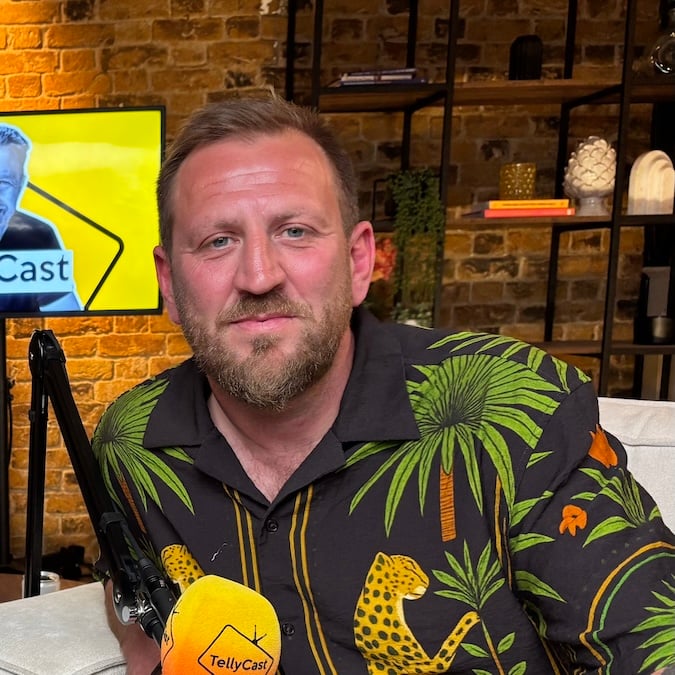
Pete Campion (pictured) is one of them.
After more than two decades producing large-scale factual television, including years spent at Raw TV working on Gold Rush and its various spin-offs, Campion could see the direction of travel long before he left broadcast television. The productions were becoming harder to make, the budgets were becoming more constrained and, despite the increasing pressure, he found himself drifting further away from the reason he had entered the industry in the first place.
“I was managing huge things,” he told TellyCast. “The last shoot I did was in Brazil in the Amazon. There were about 50 people out there. We were there for seven or eight weeks. The stress was insane. I was further and further away from the thing that I really love doing, which is being creative and telling stories.”
His departure from television was not planned as the beginning of a digital-first business. In many ways it happened by accident. Having been made redundant, Campion discovered that fellow producer Matt Ramsden had just moved into the next street. Ramsden’s own career had followed an equally distinguished path through the BBC, producing major live events, documentaries and landmark productions. Between them they had decades of experience making premium broadcast television, yet both had reached remarkably similar conclusions. The industry they had built their careers in was changing irreversibly, and if they wanted to remain creative, they would have to stop waiting for someone else to hand them permission.
The company they created, Indy Studios, has become an intriguing example of what television’s reinvention might actually look like.
Unlike many businesses entering the creator economy, Indy Studios has not attempted to become another youth-focused social publisher chasing trends across TikTok and Instagram. Instead, Campion and Ramsden have deliberately built around the subjects they already understand better than almost anyone. Years spent making adventure and other factual series have evolved into Blood & Gold, following the reopening of a century-old Californian gold mine, while relationships developed through Gold Rush have led to Legends of Gold, a history series fronted by former Discovery star Dave Turin. Rather than abandoning their expertise, they have simply taken it to a different distribution platform.
That decision perhaps reveals the biggest misconception many people still hold about YouTube. Too often it is presented as an entirely separate industry requiring completely different skills. Campion argues the opposite. Storytelling remains storytelling. What changes is the route to the audience.
One of the biggest adjustments, he says, has not been learning YouTube. It has been unlearning television.
For years, producers have developed programmes through multiple editorial layers before eventually discovering whether audiences respond. Digital publishing collapses that entire process. Viewers tell you almost immediately what they want more of, what they skip and, perhaps most importantly, what they feel has been left out.
Campion remembers instinctively cutting one of Indy Studios’ early episodes in the tightly structured way television had taught him. The audience quickly corrected him.
“They were telling us, ‘Where’s the rest of this? Don’t edit it. Give us the story. Let this play out.’”
It is an observation that says as much about changing audience expectations as it does about changing production techniques. TV has spent decades compressing stories into fixed durations built around schedules and commercial breaks. YouTube has no such constraints. Viewers decide when to stop watching rather than broadcasters deciding when programmes should end. For experienced producers, that requires not simply new technical skills but a fundamentally different relationship with storytelling itself.
The irony is that many of the skills television professionals worry have become obsolete may prove to be their greatest advantage.
Campion speaks enthusiastically about working alongside younger digital-native producers who instinctively understand platforms, algorithms and audience behaviour. Rather than seeing them as competitors, he sees collaboration as essential. They understand the mechanics of YouTube. Experienced television producers understand narrative, structure, editorial judgement and production management. Put those together and the result becomes considerably more powerful than either side working alone.
“I think storytelling will win,” he says. “Have faith in your abilities to tell a story. The technology will change and everything will change around it.”
That philosophy extends directly into the company’s use of artificial intelligence.
While much of the debate around AI has become polarised between excitement and anxiety, Indy Studios has adopted a notably practical approach. Campion has little interest in replacing creativity with automation. Instead, he sees AI solving one very specific production problem. Historical factual television has always relied upon expensive dramatic reconstruction to visualise stories for which no archive exists. For smaller production companies, those sequences have traditionally been beyond reach. AI changes that equation almost overnight.
“The storytelling is key. The scripting is key. Having a brilliant editor is key,” Campion explains. “The only thing that’s changed is that we’ve got this brilliant tool which can visualise it for us.”
It is perhaps telling that viewers spend far more time discussing the stories than the technology used to create them. Legends of Gold has rapidly built an audience measured in tens of thousands of subscribers, with individual episodes already attracting well over 100,000 views, suggesting audiences remain interested in compelling factual storytelling regardless of how certain visual elements have been produced.
Where experienced broadcasters may possess an even greater advantage is in an area receiving remarkably little attention across the creator economy: production responsibility.
As brands, charities and institutions increasingly invest in original social video, questions around safeguarding, compliance and contributor welfare inevitably become more significant. Campion believes decades spent working within broadcast television have embedded ways of thinking that many younger production businesses simply have not yet needed to develop.
That experience proved particularly valuable when Indy Studios produced the Royal British Legion’s digital Remembrance Assembly, watched by around 250,000 schoolchildren across the UK. Delivering content involving children, education and vulnerable contributors requires a level of production discipline that goes well beyond simply pointing a camera and uploading a video. Those habits, formed over years inside broadcast television, are becoming unexpectedly valuable assets within the digital-first economy.
Perhaps that is the wider lesson emerging from businesses like Indy Studios. The future does not belong exclusively to creators, nor to broadcasters. It is increasingly being shaped by people capable of combining both worlds. The creators understand audience behaviour. Television producers understand storytelling. Digital platforms provide ownership. Traditional production experience provides trust.
For decades, success in television largely depended upon persuading someone else to finance your ideas. The digital-first production economy quietly replaces that model with something altogether more entrepreneurial. Build the audience yourself. Own the intellectual property. Learn directly from your viewers. Refine continuously. Monetise repeatedly.
Asked where he hopes Indy Studios will be in three years’ time, Campion talks not about winning commissions but about owning channels, developing intellectual property, working responsibly with AI and building a sustainable business around assets his company controls. It is a very different ambition from the one most television producers would have described only a few years ago.
In many respects, that may be the most revealing part of Campion’s story. Indy Studios is not adapting to the new production economy. It is simply operating within it. The businesses that continue to view digital-first as an experiment or a side project risk missing the point entirely. This is no longer an emerging market. It is the market.
Watch the full TellyCast interview.