For much of the past two years, conversations about the future of television production have revolved around YouTube.
Industry conferences are filled with discussions about creator businesses, social video, audience migration and the opportunities presented by platform-native content. Production companies are experimenting with digital-first divisions, hiring social specialists and exploring how to build direct relationships with consumers in a rapidly changing media landscape.
Less attention has been paid to podcasting.
That is perhaps surprising given how closely the medium aligns with many of the skills television producers already possess. Storytelling, development, talent relationships, editorial judgement and audience understanding all sit at the heart of successful podcast production. Unlike video, podcasting also offers comparatively low barriers to entry, allowing producers to develop ideas, build audiences and establish intellectual property without the costs associated with traditional television production.
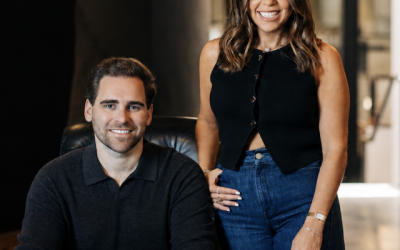
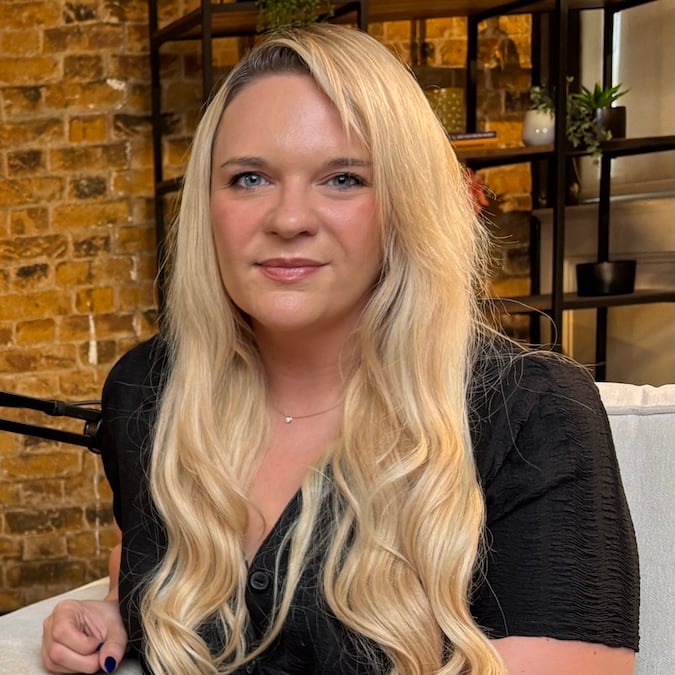
For Naomi Channell, (pictured) Head of Podcasts at Curve Media, the opportunity emerged almost by accident.
Having spent more than two decades working in television, largely in factual production, Channell wasn’t looking to build a podcast business. She was looking for a way to tell a story that mattered.
The catalyst was the case of Stuart Lubbock, whose death at Michael Barrymore’s home in 2001 remains one of Britain’s most widely discussed unsolved crimes. Channell knew members of Lubbock’s family and became increasingly aware of their frustration at how the case had often been portrayed. While media coverage frequently focused on Barrymore, the family felt Stuart himself had become secondary to the celebrity attached to the story.
When Stuart’s father Terry was diagnosed with terminal cancer, Channell began considering how she might help continue the family’s campaign for justice. At the time, true crime podcasting was beginning to establish itself as a serious genre. Programmes such as Serial had demonstrated the appetite for long-form investigative storytelling and were attracting audiences that traditional radio could only envy.
The result was a six-part podcast titled His Name Was Stuart Lubbock.
The title itself reflected the project’s central purpose. Rather than revisiting the sensational elements of the case, Channell wanted to put the victim back at the centre of the narrative. Drawing on the skills she had developed in television, she researched the case, reviewed documentation, conducted interviews and constructed a story that prioritised empathy over shock value.
The response revealed something important. Families affected by crime began contacting her directly. Survivors reached out with stories of their own. People who had experienced the often brutal realities of media attention recognised a producer they felt they could trust. What had started as a single project gradually evolved into something much larger.
Today, Channell oversees a growing portfolio of podcast brands including Real, Real Lives, Totally True Crime and The Affair. Collectively, they attract audiences measured in hundreds of thousands of downloads each month. Some are audio-only. Others have expanded into video. Several have developed highly engaged communities that extend beyond the content itself.
What makes this particularly interesting from an industry perspective is that none of it was built around a traditional commissioning model. Instead of developing ideas and pitching them to broadcasters, Channell was able to go directly to audiences. The process removed many of the barriers that television producers typically encounter and allowed ideas to find their market organically. One of the clearest examples of that shift can be seen in The Affair, a podcast hosted by broadcaster and therapist Anna Williamson.
The concept originally emerged from a television development conversation at Curve. The team had been exploring ideas around infidelity, recognising that affairs remain one of the most enduring themes in popular culture. They appear in novels, films, television dramas and newspaper headlines. Yet despite the apparent demand for such stories, turning the concept into a television format proved difficult.
The challenge was casting. Potential contributors were understandably reluctant to discuss some of the most personal moments of their lives on camera. The more the team explored the idea, the more obvious the problem became.
Then came what Channell describes as a moment of realisation. The answer was not television at all. Podcasting removed the barrier immediately. Contributors could remain anonymous. Stories could be told honestly without the pressures associated with appearing on screen. The emotional complexity remained intact, while the format created a level of intimacy that television often struggles to achieve.
The result has been one of Curve’s most successful digital-first properties. The Affair now attracts around 350,000 downloads a month and recently won a British Podcast Award.
For production companies, the significance extends beyond the success of a single podcast. What Channell’s experience demonstrates is that podcasting can function as a development platform in its own right. Ideas that may struggle to secure a commission, or which encounter practical obstacles within television, can often find a home in audio. In some cases, podcasts become proof of concept for larger opportunities. In others, they evolve into standalone businesses.
That shift is already influencing how Curve thinks about development. Where discussions once focused almost exclusively on television, projects are now evaluated across multiple formats from the outset. A concept might become a podcast, a branded content proposition, a television programme or some combination of all three. The medium is no longer the starting point. The audience and the story come first.
It is a subtle change in mindset, but one that reflects broader developments taking place across the production sector. Increasingly, content businesses are looking beyond individual commissions and thinking about intellectual property more holistically. A successful idea can generate value through multiple routes. Advertising may be the most obvious revenue stream, but it is rarely the only one.
For Channell, opportunities have already emerged in areas including live events, publishing, training and consultancy. Audience members have approached her with commercial ideas. Universities have invited her to teach. Discussions have taken place around books. Other podcast businesses are generating subscription revenues, building membership communities and licensing content to additional platforms.
This is where podcasting begins to overlap with some of the wider trends shaping the creator economy.
The most successful digital businesses are rarely dependent on a single source of income. Instead, they develop intellectual property that can be monetised in multiple ways. The content itself becomes the centre of an ecosystem that extends into events, products, partnerships, education and licensing. The podcast is often the starting point rather than the destination.
That does not mean podcasting is easy.
Monetisation remains a challenge, particularly in genres such as true crime where advertisers can be cautious about association. Channell is candid about the fact that YouTube revenues have so far been modest compared with Spotify Video, where premium advertising opportunities can deliver significantly stronger returns. Building audiences also requires consistency, patience and a long-term commitment to publishing.
Yet the broader direction of travel is becoming increasingly clear. Podcasting is no longer simply an audio medium. It is becoming part of a wider content ecosystem in which stories can move freely between platforms, formats and business models. The distinction between podcast, video, television programme and live experience is becoming less rigid as audiences consume content across multiple touchpoints.
For television producers navigating an uncertain commissioning environment, that presents an intriguing opportunity. The skills required are largely familiar. The costs are manageable. The route to audience is direct. Most importantly, producers retain a level of ownership and control that is often difficult to achieve within traditional commissioning structures.
As the industry continues to search for sustainable models for the future, podcasting may prove to be one of the most practical bridges between the world television producers know and the digital-first economy they are increasingly being asked to understand.