
According to data from analytics firm Tubular Labs, shared with The Drop, true crime viewership on YouTube has increased roughly tenfold since early 2023. The category’s growth has been so rapid that it now rivals television in both scale and engagement. And the company’s data suggests the shift is not just a temporary trend, but the emergence of a fully-fledged digital-first storytelling ecosystem.
“Three things are driving this,” says Tubular Labs sales manager Bill Challenger. The first is simple scale. In early 2023 there were fewer than 100 active true crime channels operating at scale on YouTube. Today there are 3,000. “When you see that level of creator expansion, it almost always correlates with category growth.”
The barriers to entry have also dropped significantly. “It’s become much easier to produce,” says Challenger. “Access to publicly available police bodycam footage and archive material has lowered the production barrier for creators.”
One format illustrates that shift: voiceover narration layered over bodycam footage. In Tubular Labs’ November research, that single format generated more than 100m views from just a handful of videos across 90-days. “It’s highly repeatable,” he says.
The final driver is structural, with true crime fitting the mechanics of YouTube unusually well. “The platform rewards long watch time,” he says. “True crime is naturally narrative-driven. If you can hold attention for 30, 60, even 90 minutes, that aligns very well with how YouTube incentivises content.”
The numbers underline the scale. When Tubular Labs examined the 48 top-performing long-form true crime videos across 90-days, they generated 209m views.
Tubular Labs’ data shows that videos between 20-40 minutes capture the largest share of total views, suggesting this length may be the most accessible for a single viewing session. But the deepest engagement appears in much longer content, observes Challenger. “If you’re optimising for scale and shareability, 20 to 40 minutes is efficient. But if you’re building a franchise and community, longer form content appears to strengthen audience investment.”
Perhaps not surprisingly, rapid growth has meant more experimentation with formats and storytelling. “In terms of output and participation, the category is still expanding,” says Challenger. “But creatively, it’s maturing. We’re seeing clearer host identities, more defined storytelling styles and stronger format differentiation. True crime on social media is moving from who can upload the most to who can build something recognisable and repeatable.”
One of the clearest patterns to emerge from the data relates to how stories are told. According to Tubular Labs’ analysis, videos with an on-screen presenter generate significantly stronger engagement than voiceover-only formats. “Presenter-led videos achieved about 57% higher engagement rates,” he says. “Around three percent engagement versus just under two percent for voiceover formats.”
Voiceover-driven videos can still generate very large audiences. But adding a visible host appears to shift the nature of the audience relationship. “Voiceover formats are highly scalable,” says Challenger. “But presenter-led formats build a connection.”
That relationship translates into more active audience behaviour – from comments and discussion to repeat viewing. Presenter-led videos also run longer on average. “We see that they run roughly twice as long,” says Challenger. “That suggests audiences invest more time when they feel connected to the host.” In short, the formats serve different purposes. “Voiceover scales reach. Faces scale loyalty.”
At first glance, the popularity of police bodycam footage might feel like a throwback to the early days of YouTube, when dramatic real-world clips regularly went viral. But the current wave of true crime differs in one important respect: creators are increasingly building narrative structure around that raw material.
“The most scalable format in our dataset was voiceover narration over bodycam footage,” he says. “But it also had one of the lowest engagement rates. The stronger long-term performers are layering editorial voice, context and storytelling onto that footage.”
In some cases, the result begins to resemble documentary storytelling – albeit built specifically for digital platforms.
Tubular Labs also identifies another category that continues to attract large audiences: television archive content uploaded by media companies. “There is still very substantial viewership going to traditional TV archive content,” says Challenger.
As the genre matures, the data suggests digital-first true crime is separating into three complementary models. Firstly, TV companies repurposing television archive material. Secondly, voiceover-led formats built around bodycam or documentary-style footage. Thirdly, personality-driven storytelling native to YouTube. “The latter range from creators speaking directly to camera for extended periods to those going into the field to investigate stories themselves,” he says.
The comparison between channels powered by creators and those powered by traditional media companies makes for interesting reading. Looking at long-form true crime videos over ten minutes that generated at least 10,000 views in the past year, influencer-led accounts produced roughly seven billion views, according to Tubular Labs. Media companies generated a much lower 1.4 billion.
But the comparison is more nuanced than it appears. Media companies generate twice as many views per video on average. Influencer-led channels, however, deliver double the engagement rate. “In other words, influencers win on overall scale and community depth,” says Challenger. “Media companies win on per-video reach. So it’s not a simple creator vs broadcaster story. It’s two different models.”
The next phase of true crime’s growth will be about authenticity and differentiation. “The true crime brands that endure will look less like compilation channels and more like editorial franchises with a clear voice and point of view.”
Sam Pearson is executive producer Hearst Canvas, Hearst EMEA’s new digital-first division. Here he identifies some intriguing lessons about what works with true crime stories online.
1: Put audiences inside the investigation
One of Pearson’s clearest learnings came from Get My Bike Back, a four-part mid-form series following a London bike-recovery team tracking down stolen e-bikes. Built around bodycam, phone and drone footage captured during real recoveries, the series placed viewers directly inside the action. Pearson says the approach reinforced a growing appetite for first-person investigative footage. Rather than relying heavily on reconstruction or narration, the series used real-time material and short interviews to explain what the recovery agents were doing and thinking. “People want to feel like they’re part of the process,” he says.
2: Iteration is a major digital advantage
Another project, My Child Killed, demonstrates how digital distribution allows producers to refine a series while it is already in market. The interview-led series from Fawkes Digital explores the experiences of parents whose children have committed serious crimes, giving families a chance to tell their own stories.With only one episode released so far, the team has been analysing retention curves, audience feedback and completion rates across platforms. Pearson says those insights are feeding directly into the remaining episodes still in production.
That ability to iterate is a major departure from traditional TV commissioning. Digital-first releases allow producers to track how viewers engage with interviews, narrative structure and host presentation – then adjust the next episodes accordingly.
3: Human stories travel across platforms
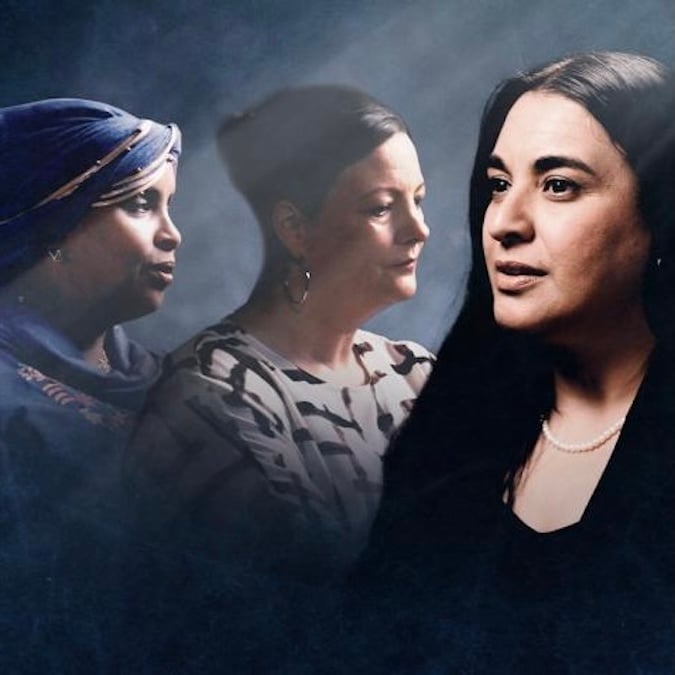
Another series, Unbreakable (pictured), focused on survivors of abuse telling their own stories in interview. Produced as short-form episodes, it was distributed widely: on YouTube and VOD platforms, as a long-form podcast adaptation and as short vertical clips for TikTok and Instagram. While the longer episodes delivered strong watch time and completion rates, Pearson says the short social clips generated the biggest reach.
The experiment reinforced a key principle of digital factual commissioning: the same story can succeed in multiple formats when tailored to different platforms and viewing contexts. At the same time, says Pearson, the show underlined the point that the most compelling digital true crime stories focus on human perspective.