
Brands are embracing micro-dramas but overlooking the potential of social creators, according to a new global study which finds that most advertisers are producing short mini-series without involving the talent that could help them engage more effectively with digital-first audiences.
The findings come from Brands and Micro-Dramas: What 104 branded series tell advertisers, a new white paper from branded entertainment consultant Rupert Britton, founder of RA Britton Consultancy, shared exclusively with The Drop ahead of its general release today (November 24).
The research examines 104 branded micro-drama series launched or promoted around the world between November 2025 and November 2026, covering markets including North America, China, India, Asia-Pacific, Europe, Latin America and the Middle East and Africa.
One of its central findings is a significant gap between the growing popularity of creator-led entertainment and the way brands are approaching micro-drama. Only 21 of the 104 series involved social creators as cast members, writers, producers or distributors, while 56 featured professional actors or celebrities.
Rupert Britton said: “Brands have embraced the micro-drama format, but most have not yet embraced the people who make it work on social. Creators know how to hook a viewer in the first few seconds, and they bring an audience that already trusts them. Leave them out and you are paying for the look of a micro-drama without the audience.”
The study reveals significant regional differences. In India, creators were involved in six of the 12 branded series identified, while none of the 25 Chinese series credited a social creator.
The report also highlights the fact that brands are borrowing the visual style and storytelling techniques of micro-drama without adopting the long-running episodic structure that has helped make the format successful.
Of the 70 branded series with a known episode count, the median was just six episodes, compared with 58 for English-language series on dedicated micro-drama apps, according to data from MicroDramaList. Two-thirds of the branded series had ten episodes or fewer.
Britton argues that the relatively short length of branded productions changes the commercial proposition for advertisers. “The typical branded series has six episodes. That’s a mini-series, and it changes what brands should expect. You’re not building a binge habit; you’re telling a short story well. That makes the hook and the cliffhanger matter more, not less.”
Overall, Britton’s research points to rapid growth in branded micro-drama production. It identified 70 series launched in the second half of the 12-month study period, compared with 32 in the first half. September and October 2026 alone accounted for 31 launches.
The study also suggests that advertisers are more comfortable distributing micro-dramas through established social platforms than through the specialist apps that have driven the format’s popularity.
Of the 104 productions examined, 78 appeared on open social platforms such as TikTok, Instagram, YouTube and Douyin. Only 13 appeared on dedicated drama apps, with just six distributed exclusively through those services.
Britton suggests that brands prefer platforms where they already have established media-buying and measurement capabilities, while some are wary of the content associated with dedicated drama apps.
The research also identifies changing patterns in the types of brands using the format. Beauty and personal care remains the largest category, accounting for 21 series, but financial services has emerged as a significant participant, with nine productions, level with technology.
Brands experimenting with the format include Mastercard, Visa, Venmo, Japan’s Mizuho and South Africa’s Absa. Among the examples cited is Mastercard’s K-drama about payment scams in South-East Asia, while Visa has worked with Daddy Yankee on a dance-themed romance.
The study also finds that brands are frequently integrating themselves into the narrative rather than relying on conventional sponsorship or product placement. In 93 of the 104 series, the brand was part of the story itself.
Another finding is the difference in creative approaches between China and other markets. Comedy features in 63% of branded micro-dramas produced outside China, compared with just 24% of Chinese productions, where romance and drama are more prominent.
Britton’s analysis also identifies seven commercial structures through which brands are entering the market, ranging from commissioning and owning original productions to sponsoring existing studio projects or collaborating with broadcasters, platforms and creator networks.
However, the study highlights a shortage of publicly available evidence about the effectiveness of branded micro-dramas. Just three of the 104 productions disclosed a budget, while 61 had no publicly reported results specific to the series.
Britton argues that brands need to give greater consideration to distribution, measurement and audience retention rather than focusing their investment primarily on production.
The white paper also identifies a potentially significant opportunity for UK advertisers. According to Omdia figures cited in the report, the UK had 8.2 million monthly micro-drama users in 2025, making it Europe’s largest market. Yet only four of the 104 branded productions examined were made in the UK.
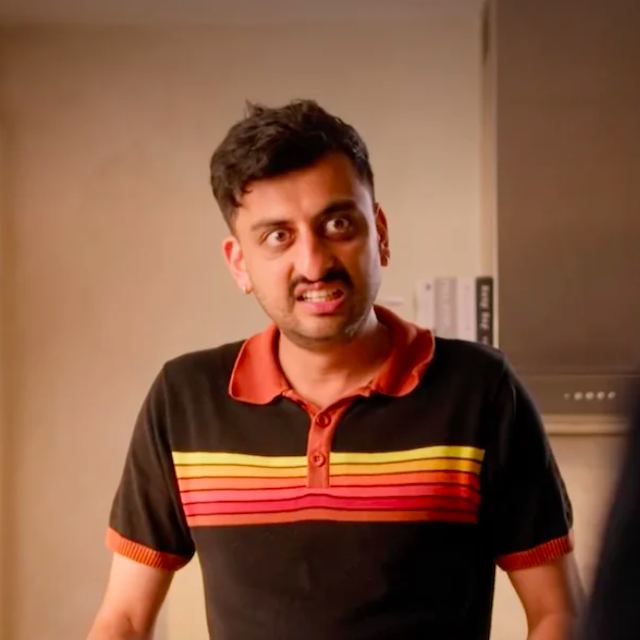
Recent activity includes Channel 4’s first vertical drama, The Guest List, funded by Sol de Janeiro, and Jamie Oliver’s five-part comedy Finding Jamie While He’s Finding Himself, created in partnership with Life360 and distributed through his own social channels. The Co-op also backed a recent micro-drama (pictured) that aligns closely with Britton’s observations.
The report suggests that partnerships between brands, creator studios, broadcasters and social platforms could accelerate development of the UK market.
The free white paper is accompanied by a more extensive publication, Brands and Micro-Dramas: The Global Report, which includes the complete audit of 104 series, detailed analysis of the seven commercial deal structures, and additional chapters covering creators, AI, commerce, effectiveness and the UK market.
Britton was also a speaker at the recent TellyCast Digital Content Forum, where he joined a panel exploring the growing role of brands in vertical drama. He highlighted the challenges posed by the subscription-based model and brand-safety concerns surrounding some micro-drama apps, while predicting that micro-series would become the next frontier for creator-led content. He also suggested AI could open up new creative opportunities for advertisers, making genres such as action-adventure and horror more accessible to brands.