Podcasts are no longer just audio experiences. As platforms, audiences and economics shift, a new video-first era is emerging – turning simple shows into multi-platform brands designed to be watched, shared and scaled. The Drop investigates.
The podcast boom has been rumbling along for the best part of two decades, but something has shifted over the past few years. What began as an audio-first medium designed for commuters, park joggers and dog walkers is rapidly morphing into something else – a hybrid format where video, social clips and platform-agnostic distribution are now playing a bigger role than the audio feed.
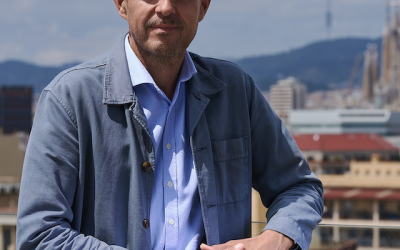
The term “vodcast” (video podcasting) has emerged as shorthand for this trend, even if few people seem particularly fond of the word. What is clear, however, is that podcasts are no longer just podcasts. They are multi-platform content brands – filmed, distributed and monetised across YouTube, social platforms and streaming services. “It’s become a visual medium,” says Platform Media chief content officer Darby Dorras, one of the execs driving the shift from podcast to vodcast. “Audio is still there, but increasingly the audience expects to watch as well as listen.”
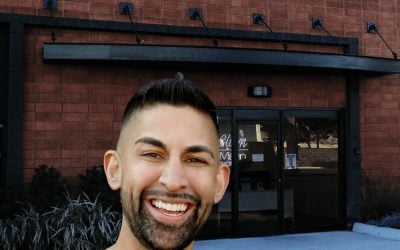
Independent consultant Steve Ackerman, whose career has taken him via radio, TV, digital media and podcast, says there is undoubtedly a paradigm shift. “Podcasting started as radio on demand,” he says. “But what we’re seeing now is much closer to TV production. Once cameras come into the studio and you start thinking about sets, multi-camera production and visual storytelling, you’re effectively creating a show.”
Matt Campion, co-founder of production company Spirit Studios, says his company began experimenting with filmed podcasts nearly a decade ago when it launched the Private Parts podcast with reality star Jamie Laing. “But it’s really only in the last 12 to 18 months we’ve seen a seismic change,” he says. “Unless you’ve got a hit show, audio-only podcasts are becoming much harder to launch and monetise. What we’ve all realised very quickly is that audiences are increasingly choosing to watch.”
What is driving the shift?
So what is driving this shift? The answer is multi-faceted – but one factor is support from platforms, with Spotify, Apple and Amazon all embracing the shift to video. Then there is the inexorable rise of YouTube which, almost despite itself, has become the leading vodcast platform. At the time of writing, The Joe Rogan Experience had 20.8m subscribers on YouTube while Steven Bartlett’s Diary of a CEO was at 15.4m, though the channel also notes that 64% of its viewers don’t subscribe.
Campion says, in the early days of podcasts, “We’d put video cameras on a podcast – almost like surveillance footage of a recording session. We would then put that video on social platforms primarily for marketing purposes, to drive audiences towards the audio feed. But that dynamic has reversed. Now the focus is YouTube first because of the greater revenue opportunities the platform unlocks.”
This pursuit of an economically viable podcasting model goes hand in hand with fundamental shifts in the audience/platform dynamic, explains Dorras. “These days, audiences’ eyes and ears are pulled in every direction, which makes targeting them very difficult if you are just focusing on audio content. We’re in a world now where people are scrolling through social platforms looking for things that interest them. The shift to video means there are now multiple opportunities for us to reach them.”
The appetite for affordable content
Another factor, says Dorras, is the media industry’s insatiable appetite for scalable, cost-effective content. Platform, for example, has enjoyed singular success with companion podcasts around shows like The Traitors (Traitors Uncloaked). Much loved by audiences, these brand extensions are a way of delivering extra value to fans without having to allocate enormous budgets.
This appetite for affordable content isn’t only about companion podcasts. Platforms and broadcasters have quickly realised that visualised podcasts in all their forms can do a job as part of a broad content mix. Netflix, for example, commissioned Platform to create a vodcast to support its new Peaky Blinders movie, The Immortal Man, and has also acquired a slew of vodcasts from Spotify and iHeartMedia in recent months.
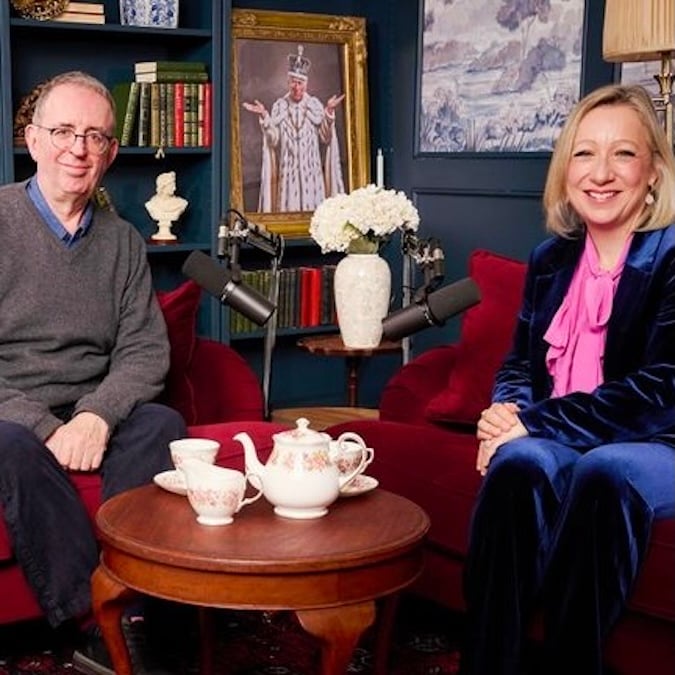
Broadcaster Channel 5, meanwhile, commissioned Spirit to create a royal-themed show, Catching Up With The Royals (pictured): “It’s basically a podcast and a TV show at the same time,” says Campion. “We lean into the podcast aesthetic, but it’s shot like a proper studio production – multi-camera, designed set etc.”
Talent and authenticity
Ackerman endorses the above points but also identifies another area driving the growth of vodcasts: talent. “I think one of the key factors has been a merging between the influencer world and what was the podcasting world,” he says.
This has created a snowball effect: “As influencers started to release their own podcasts, podcasters in the audio-only space started realising they should also be in video. Now we’re at a point where established celebrities also want to be in the vodcast business because they see it as a way to control their own content.”
Ackerman also identifies another key point driving the sector: authenticity. “Podcast-style conversations allow you to spend time with people in a way that television rarely does,” he says. A traditional TV chat has tightly structured segments but vodcasts offer a looser format and longer conversations.
Campion agrees, arguing that the limitations of digital budgets have inadvertently created a new style of programming. “Podcast formats aren’t as contrived as traditional chat shows,” he says. “They’re freer, more conversational. Audiences feel like they’re hanging out with the talent – and we definitely lean into that.”
A surge of new shows
Put all of these factors together and it’s no surprise that 2026 has seen a huge surge in new podcasts. Immediate has just launched a Good Food podcast hosted by Gavin & Stacey stars Joanna Page and Mathew Horne, while Goalhanger has expanded its vodcast empire with the launch of The Book Club.
UK pubcaster the BBC has unveiled a robust new slate of video podcasts across BBC iPlayer, BBC Sounds and YouTube, building on a survey that found 3 in 5 podcast fans have watched a podcast in the last week.
This includes Sort Your Life Out Unpacked with Dilly Carter and Race Across the World: The Detour. Underlining the increased blurring between podcasts and social, there are also dedicated YouTube channels for podcast-originated brands like Uncanny with Danny Robins and Fame Under Fire with Anoushka Mutanda-Dougherty.
Beatrice Cooke, service executive, BBC iPlayer, says: “Video podcasts let us take audiences even deeper into those worlds. They’re a powerful way to build fandom and bring new, younger audiences to the BBC.”
Building brands, not shows
Having established the factors driving the growth of vodcasts, the obvious next question is – what does it mean from a strategic perspective? For Campion, the big opportunity is to use vodcasts as the starting point for broader content ecosystems.
Campion describes this approach as ‘IP360’, a model in which an idea begins as a low-cost digital format before expanding into other forms of media. “The key is starting with a minimum viable product,” he explains. “Something you can launch cheaply but that has the potential to grow into a bigger brand.”
Spirit has seen this approach work first-hand. Campion cites a comedy project that began as a £4,000 marketing stunt for comedian Joe Lycett. The concept eventually evolved into a television commission. “Our proof of concept did four million views online,” he says. “Two years later ITV commissioned the series.”
The point, says Campion, is that: “You’re not just making a show anymore. You’re building a brand that can become a podcast, a YouTube channel, a documentary series, live events, merchandise.”
The scaling of IP ecosystems that can build multiple revenue streams is also a key pillar of Platform’s strategy. This explains its investment in original content like Olivia’s House with Olivia Attwood and Bottom’s Up with Alan Carr – as well as the recent acquisition of The Good, the Bad and the Rugby podcast (see panel).
Interestingly, Platform now has a slew of podcasts that use The Good, the Bad title (eg the Football; the Beast) – a reminder that there is also a subset of vodcast activity which centres on the lateral expansion of brands, with Piers Morgan’s Uncensored and Goalhanger’s The Rest Is… among the more prominent examples.
Alongside building owned IP with talent, Dorras says Platform has two other core areas of activity. “The first is brand-funded content. A brand has X amount of money to spend and we build something that might be short form, might be long form, that could be a podcast or that might live on YouTube or other socials.”
Then there is commissioned content, which primarily means TV companion shows. There’s no question that, from a platform perspective, these brand extensions have good economies of scale. But Dorras resists the idea that this equates to lowest common denominator content. “We’re obsessed with pushing the boundaries of what companion content can be,” he says. “So, when Netflix asked us to produce the official podcast for Peaky Blinders: The Immortal Man and release it on Netflix, the brief was clear: make it as bold and ambitious as the film itself.”
Dorras says: “We didn’t just want to talk about the show; we wanted to capture the grit, the cinematic scale, and the gravity of the Shelby saga. Why? Because in a fragmented media landscape, the audience deserves more than a standard behind-the-scenes look or digest. They want a premium extension of the story they love.”
The premium-isation play
At first sight, this premium-isation of vodcasts may seem counter-intuitive to the idea that they are affordable brand extensions. But there is a critical point here. It’s so cheap and easy to make a vodcast that the market is becoming flooded with me-too shows.
Joe Rogan addressed this in a recent edition of his own vodcast, noting that it’s becoming “a saturated market. You think about how many fucking shows there are now. It’s kind of nuts. There’s never been a time when there’s more things to watch.”
Arguably the best way to combat that is the premium-isation advocated by Dorras, rather than adding yet more video to the expanding pile of social slop.
Ackerman backs this idea, arguing that the market will see more sophisticated visual storytelling, driven in part by advances in AI. Narrative formats such as true crime, he suggests, are moving in that direction. As AI tools improve, they will enable creators to “bring the story alive” in more compelling ways, he says. The downside, of course, is that AI is also likely to drive an exponential increase in decidedly average content.
What comes next
Ackerman’s view is that “podcasting is still a relatively baby industry” in which the monetisation and production models are still evolving. This leaves plenty of room for new entrants and experimentation.
In the short term, he anticipates format experimentation accelerating, particularly around episode length and structure. “We’ll see full-length and short start to meet somewhere in the middle,” he says, predicting a shift towards more flexible, audience-driven formats. Rather than rigid adherence to traditional podcast lengths, creators will increasingly adapt content to different platforms and consumption habits.
As with all sub-sets of social, he says commercial success will derive from fandom and community. For this reason, he sees the growth of live as a significant and growing part of the vodcast ecosystem. This includes everything from large-scale arena shows to live podcast events and festivals. For Ackerman, this is a natural development once podcasts become imbued with social’s DNA.
All of which leaves one thorny question – what to call this evolving format. Darby Dorras, for one, isn’t that bothered. “While the industry continues to eat itself over what should or shouldn’t be called a podcast, the audience is voting in their millions that it’s the content that matters – not what it’s called.”